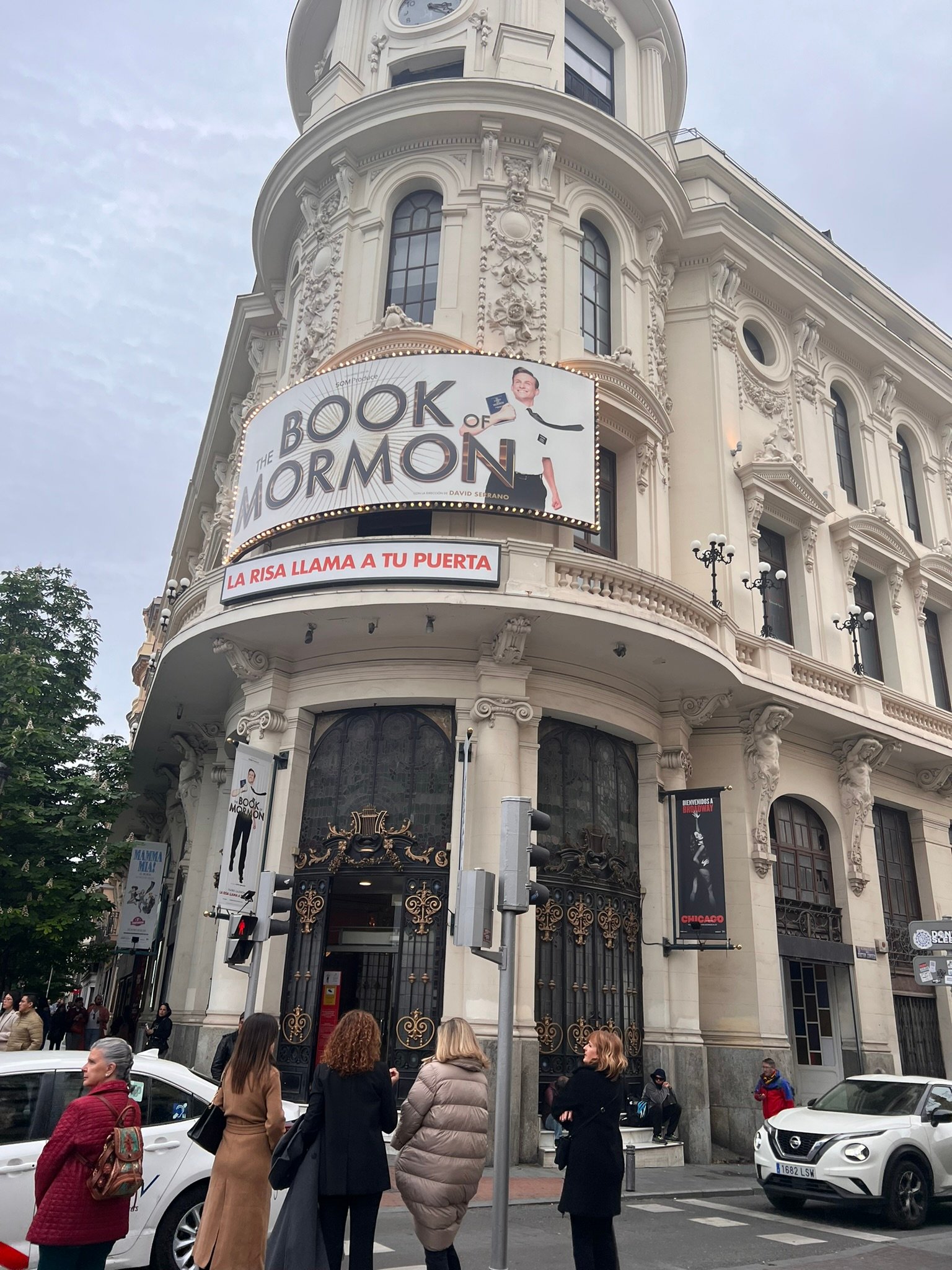
Rounded corner building with a theatre advertisement.
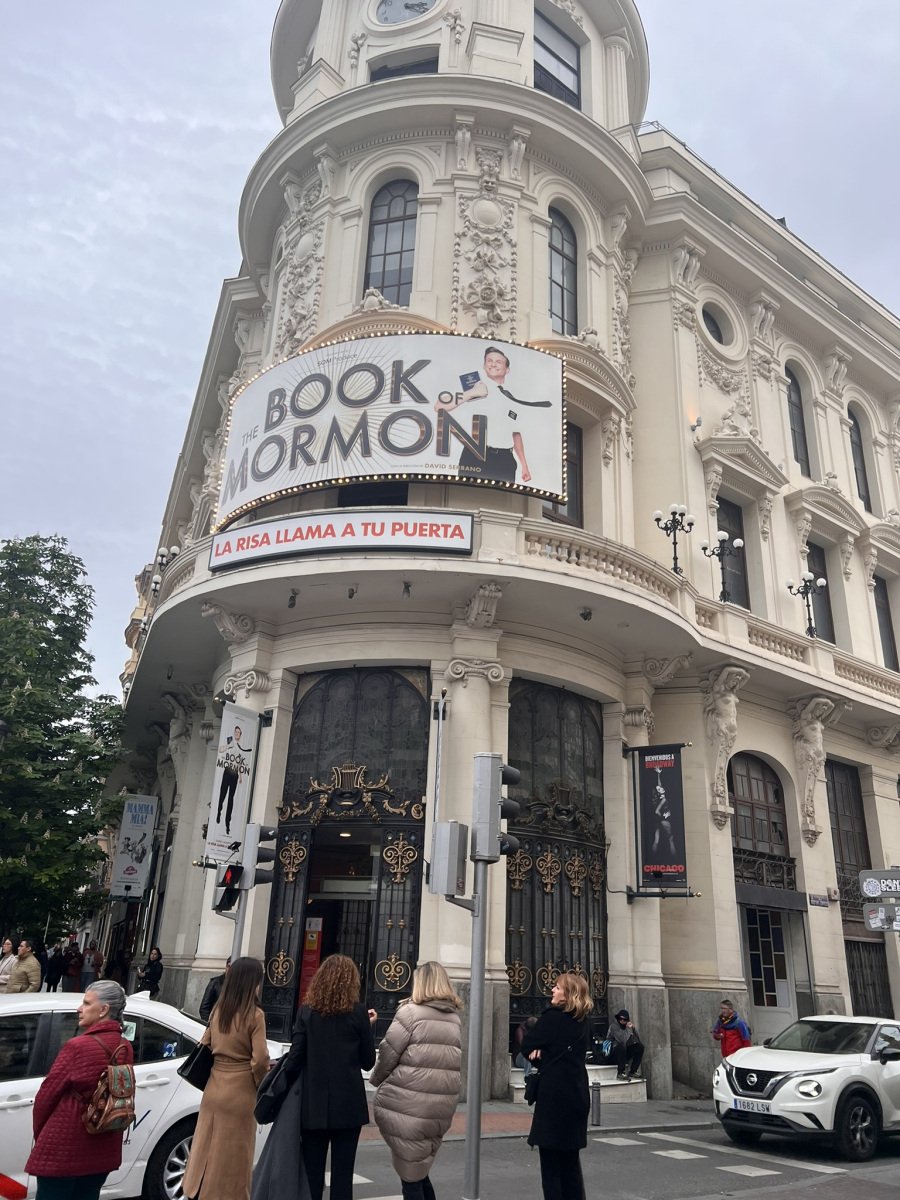
Rounded corner building with a theatre advertisement. Photography by A. Abbady.
A City Read at Walking Pace
Madrid can be photographed as a succession of grand monuments, but it also rewards attention to the spaces between them. This collection follows streets lined with balconies, squares enclosed by brick façades, formal garden paths and flowers seen close enough to lose their wider setting. Its nineteen photographs move between the scale of the capital and the scale of a single blossom. Together they offer a photographic introduction, rather than an attempt to show every landmark in the city.
The pictures preserve everyday surroundings: buses, scooters, advertisements, pedestrians and patches of uneven light. These details connect architecture with the people who use the streets. A building photographed above a busy pavement belongs to a different kind of composition from a statue isolated against trees. Both are useful ways of looking at Madrid, and neither requires the city to appear empty.
Several locations can be named confidently, including Plaza Mayor, Plaza de la Villa and the Monument to Alfonso XII in El Retiro. Other photographs are captioned through their visible features. A church façade or garden statue can remain interesting without an unsupported identification. That distinction allows the historical account to stay anchored to evidence while leaving space for further discoveries in the photographic archive.
Plaza Mayor: Architecture Around an Open Sky
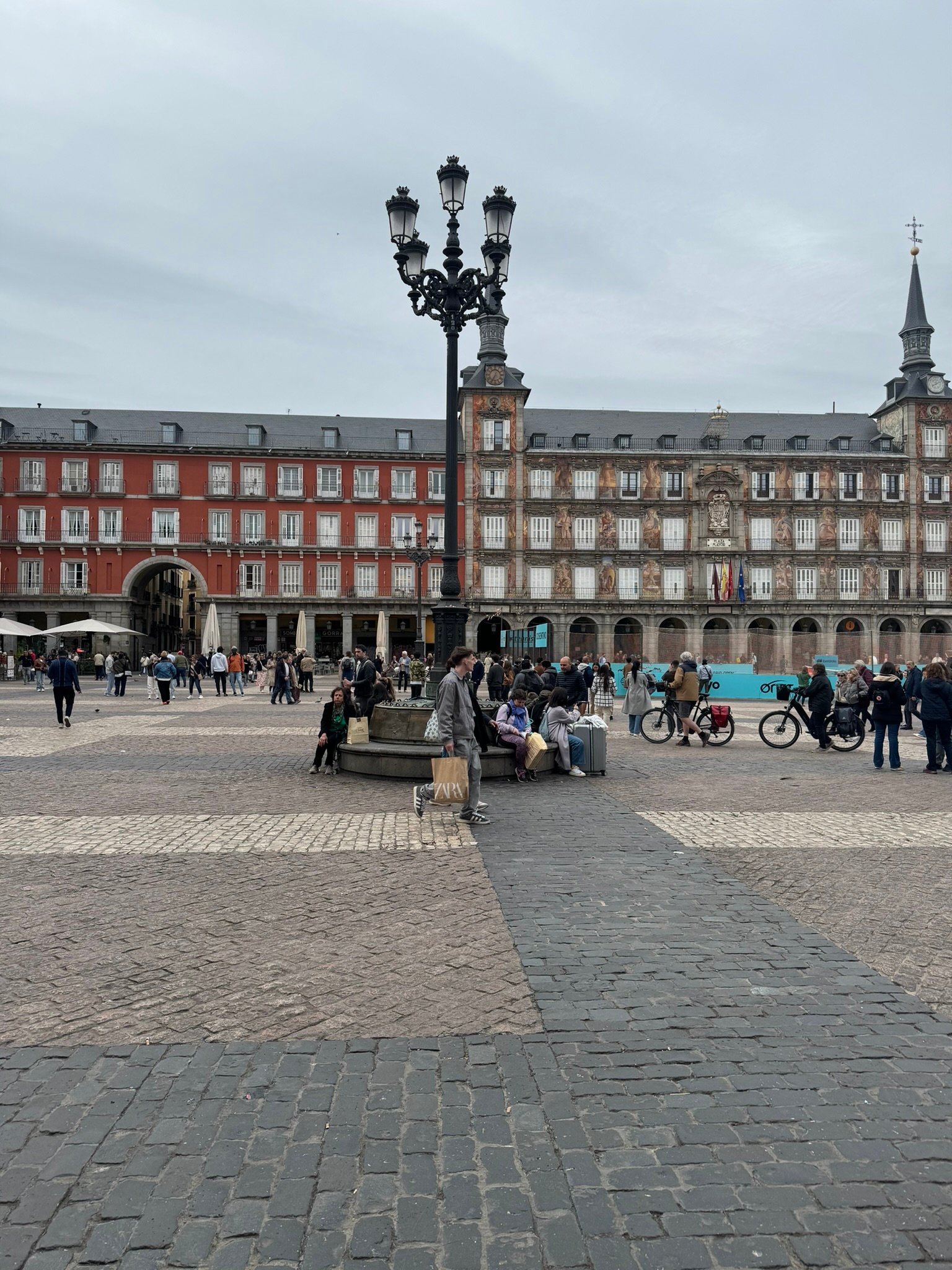
Plaza Mayor grew from the earlier market space known as Plaza del Arrabal. Madrid’s official tourism history connects the square’s transformation with the arrival of the court in 1561 and the later work of Juan Gómez de Mora under Philip III. Fires repeatedly changed the ensemble; after the destructive fire of 1790, Juan de Villanueva reshaped the square and its entrances. The place visible today therefore carries a history of rebuilding as well as of royal planning. [1]
The photograph uses an ornamental streetlamp as its foreground anchor. Beyond it, rows of windows and arcades establish the enclosing walls of the square. The open pavement gives the composition depth, allowing the eye to travel from individual paving stones to the repeated openings of the buildings. People and bicycles offer a measure of scale without becoming the principal subject.
The enclosure is part of the square’s visual strength. Elsewhere, a street leads the eye away toward another junction; here, architecture turns the gaze back into a shared interior space under the sky. The red surfaces, pale trim and dark roofs create a recognizable rhythm. A photograph cannot compress every episode of the square’s past into one frame, but it can show why the space remains such a strong urban stage.
Plaza de la Villa: The Smaller Civic Square
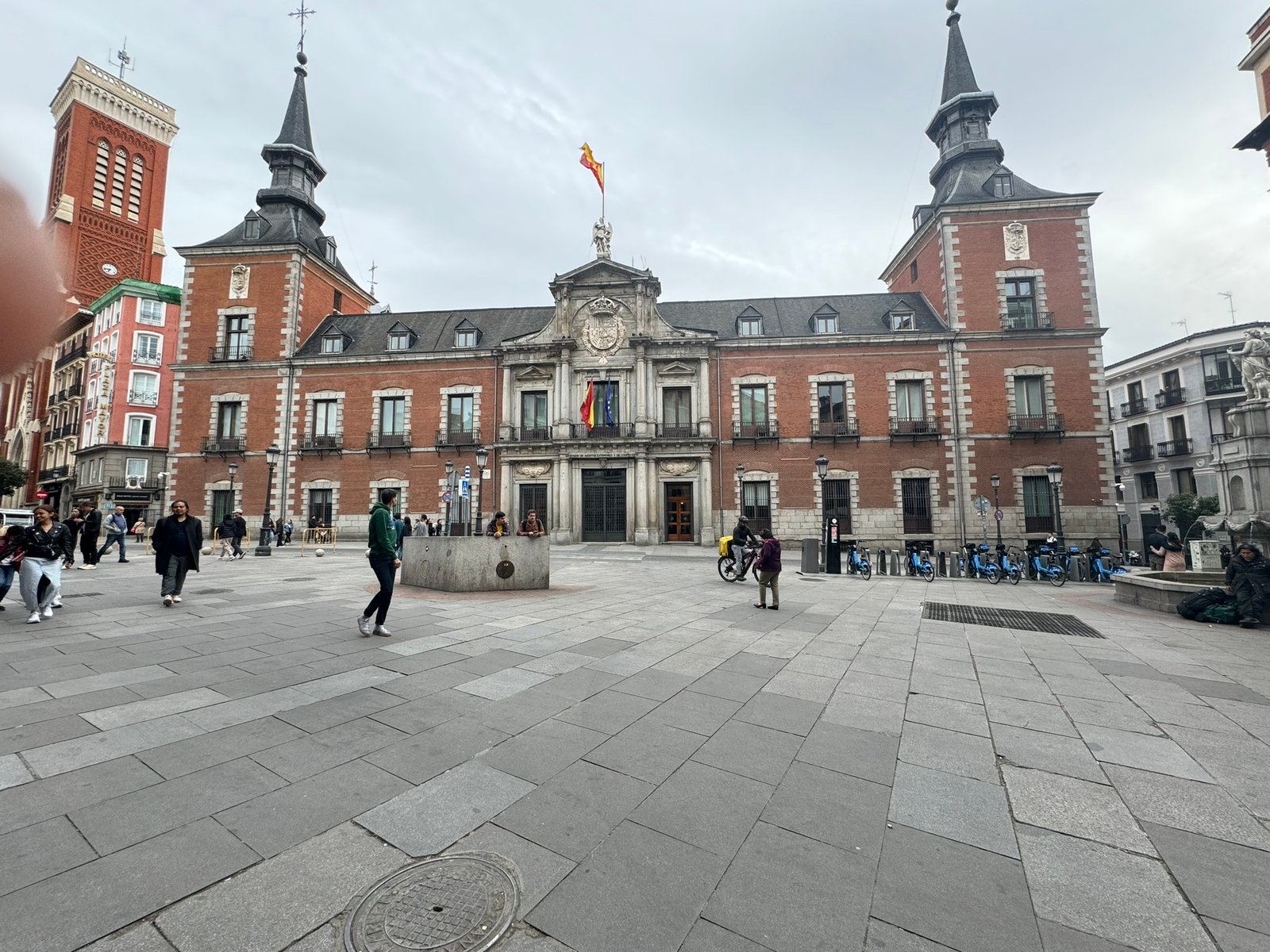
Plaza de la Villa presents another scale of historic Madrid. The city’s tourism service identifies an ensemble spanning several periods: the medieval Casa y Torre de los Lujanes, the sixteenth-century Casa de Cisneros and the seventeenth-century Casa de la Villa. The latter served as the home of Madrid City Council. The square also contains a monument honoring the admiral Álvaro de Bazán. [2]
In the photograph, Casa de la Villa’s twin towers and central entrance establish a balanced composition. The façade combines pale stonework with brick, giving the building both a ceremonial center and a regular pattern of windows. The broad paving in front makes room for the architecture to be read as a whole. Unlike a close view of a doorway, this distance shows how the building addresses the square.
Moving from Plaza Mayor to this smaller civic space changes the pace of the photographic story. The interest is less in the dramatic enclosure of a great plaza than in the relationship between a public building and its immediate setting. Different periods meet in a compact area. That layering is a reminder that the familiar idea of historic Madrid includes successive changes in building, government and daily use.
Streets, Balconies and the Modern Capital
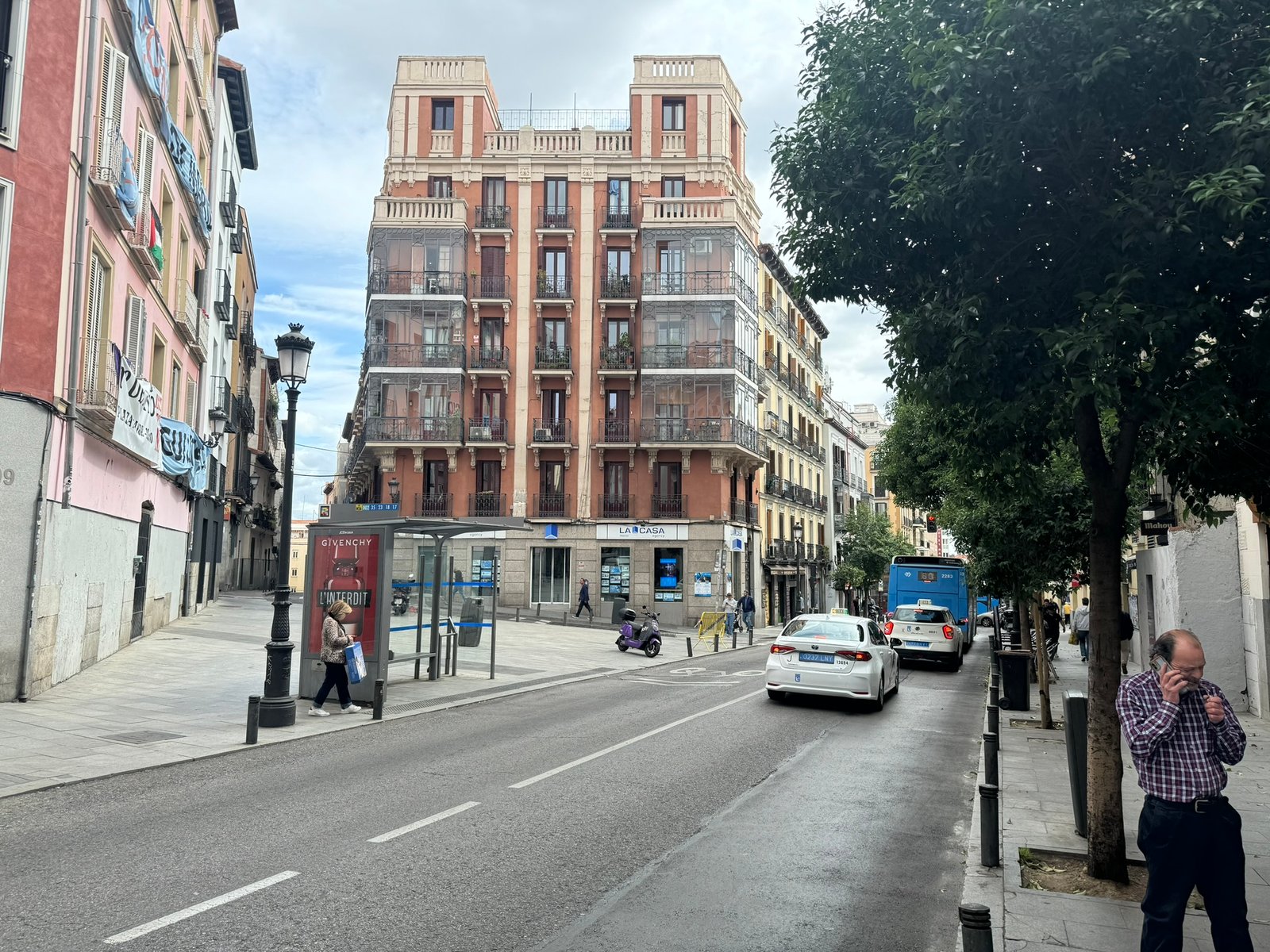
Between the squares, the collection returns to ordinary intersections. Yellow plaster, red brick and pale stone sit beside one another; iron balconies repeat above street-level shops. Cars interrupt the sightlines, while trees soften the hard edges of façades. Looking through these photographs means noticing the city as a connected fabric rather than separating every building from its neighbors.
Madrid’s development also includes major interventions that altered that fabric. Gran Vía was built in stages between 1910 and 1931, introducing a new avenue through the older center and becoming associated with modern architecture, commerce and entertainment. The official city account describes both its traffic-relief purpose and the different architectural tendencies expressed along its successive sections. [3] This wider context helps explain the variety encountered when moving between the older streets and the commercial city.
The rounded corner building carrying a theatre advertisement illustrates the meeting of architecture and entertainment in the streetscape. The photograph is captioned through those visible features rather than assigned an uncertain building name. Its upper floors draw the eye upward, while the advertisement and people below bring the view back to the contemporary city. The result records the building as it was encountered, with its temporary signage still part of the scene.
Church Fronts and the Texture of Brick
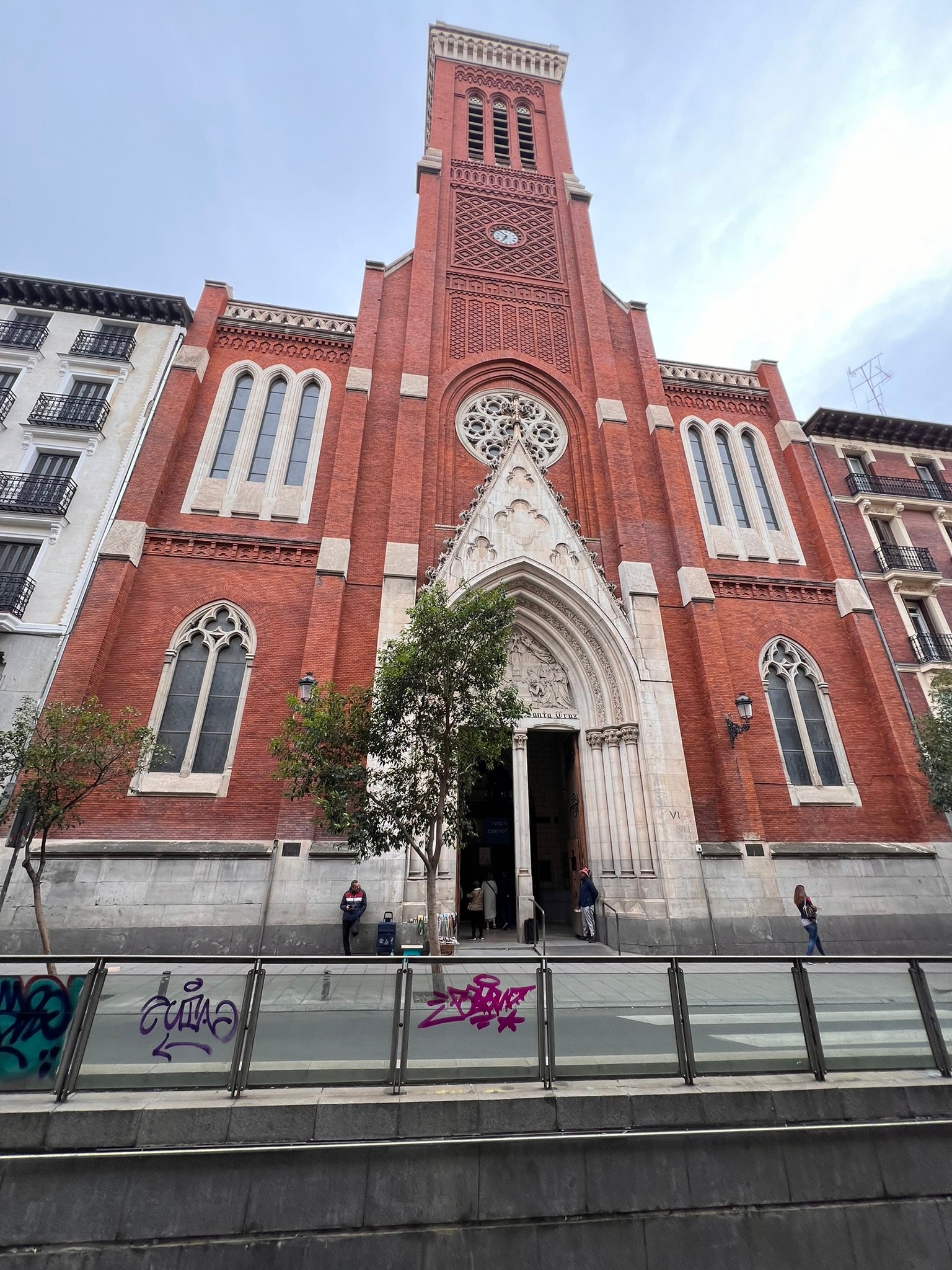
A red-brick church façade introduces a more vertical composition. Pale detailing frames the entrance and rose window, while the tower rises above the roofline. The contrast between brick and light-colored ornament makes the structure legible even beneath an overcast sky. Seen from the opposite pavement, it remains connected to railings and the street rather than detached from its surroundings.
The photograph is included as an architectural study. The church’s precise identity and construction history have not been established for this selection, so no foundation date or dedication is attached to it. This is a useful limit: a pointed arch or a rose window alone does not establish the age of a building. Architectural forms can be revived, altered and reused in later periods.
Nearby street photographs offer a similar lesson in looking. A brick institutional frontage, a pale corner building and towers seen above neighboring roofs show several ways that masonry can shape a city view. Repetition, surface color and the proportion of openings matter as much as a famous name. These supporting scenes make the collection more than a sequence of headline monuments.
El Retiro and the Monument to Alfonso XII
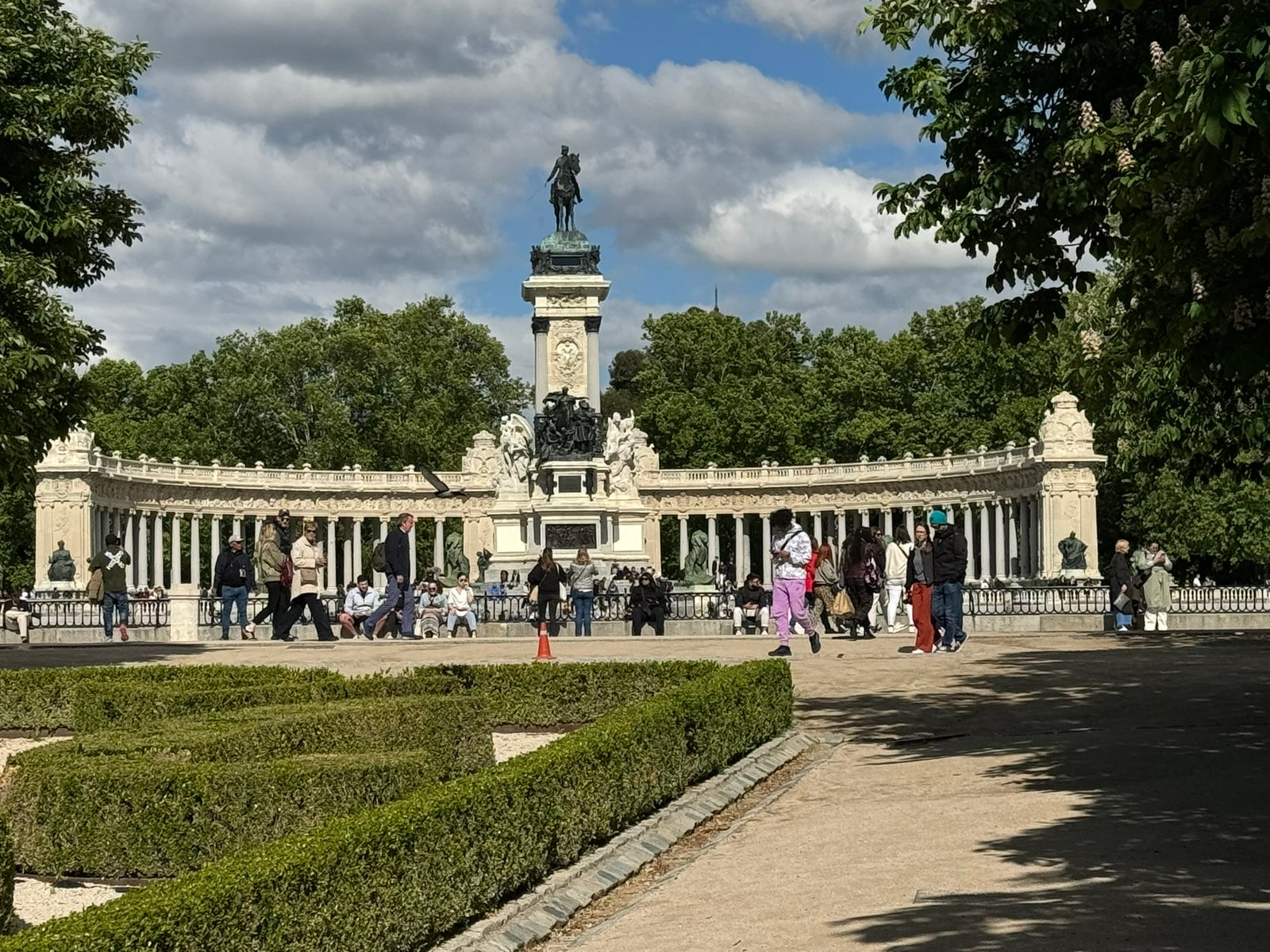
The Monument to Alfonso XII stands beside the great pond in El Retiro. Inaugurated in 1922, it was designed by José Grases Riera, with an equestrian figure by Mariano Benlliure. Madrid’s official tourism account describes a semicircular composition with a double Ionic colonnade and a raised central monument. The architectural sweep is an essential part of its effect, bringing sculpture, columns and the waterside setting into one ensemble. [4]
In the selected photograph, clipped hedges occupy the foreground and lead toward the monument. Trees frame the scene, while the sky shifts between bright cloud and darker masses. The colonnade creates a horizontal counterweight to the central vertical figure. This relationship makes the structure readable even before its sculptural details are examined.
The park belongs to a broader cultural landscape. UNESCO inscribed Paseo del Prado and Buen Retiro, a landscape of Arts and Sciences, in 2021. Its description links tree-lined urban space with institutions devoted to culture, science and public knowledge, and identifies Buen Retiro as a remnant of a seventeenth-century palace landscape. [5] The designation concerns the wider relationship between landscape and city, not simply a list of isolated attractions.
Garden Sculpture and the Geometry of Paths
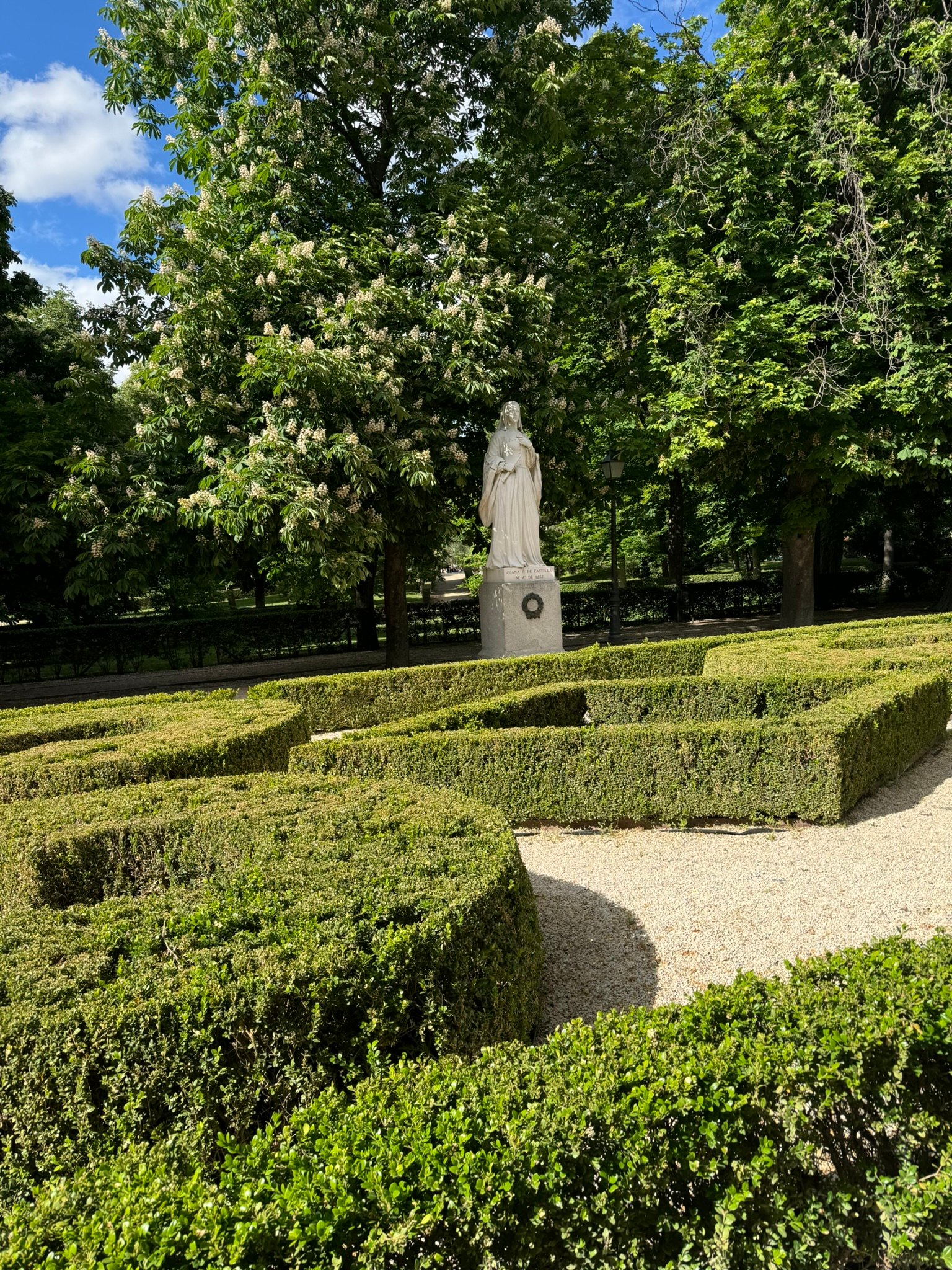
Other garden photographs concentrate on stone figures, gravel paths and low hedges. Their exact statue identities are left open in the captions. The visual relationship is clear: pale sculpture stands against dark foliage, while clipped planting introduces lines and curves at ground level. A path may approach a figure directly, pass beside it, or reveal it across an intervening pattern of hedges.
These views create a quieter counterpart to the city streets. Traffic and shopfronts give way to textured leaves and open space around a pedestal. Yet the compositions still depend on architecture in a broad sense: the deliberate organization of routes, edges and focal points. The garden is shaped, and the photographs make that shaping visible.
The different distances are worth retaining. A closer statue study emphasizes the figure and its base; a wider frame explains how the same kind of object occupies a planted setting. These are related subjects, but they contribute different information. They allow the photographic narrative to move from a monumental public memorial to the more intimate experience of a garden walk.
Flowers: A Change of Scale
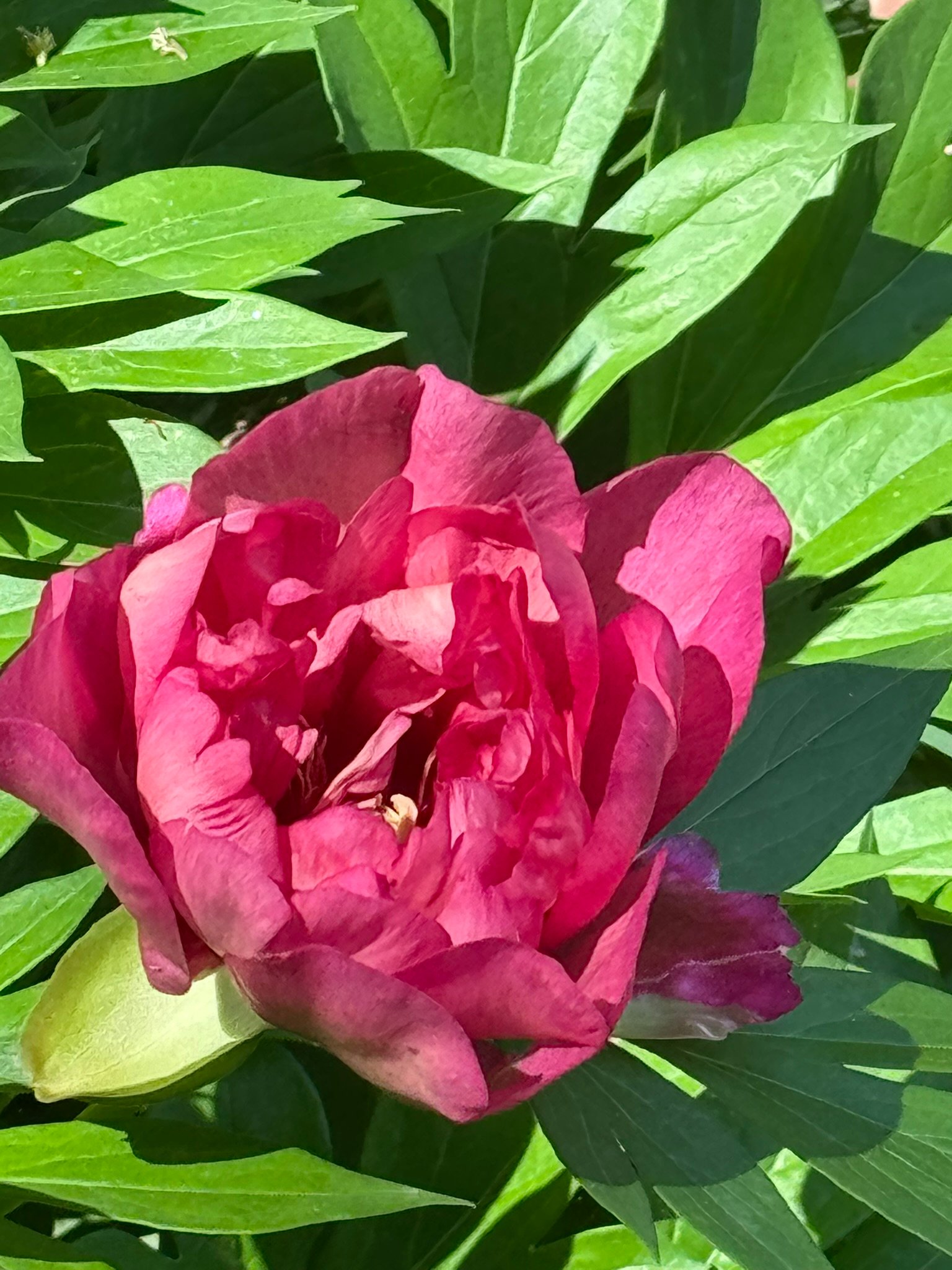
The flower photographs bring the collection to its smallest subjects. White petals appear against dark leaves, a closed bud is held within a green frame, and pink blossoms catch direct sunlight. Their appeal comes from color, texture and the shift between stages of growth. No botanical species is asserted here without a secure identification.
In a city story, these close views can function as pauses. They do not explain a square’s planning or a monument’s dedication, but they record another part of looking while traveling. After a run of masonry and street perspectives, the curved edge of a petal changes the visual rhythm. The background becomes less important, and attention settles on a small area of light.
Seen together, the nineteen photographs present Madrid through changes of scale: public square, civic façade, street corner, garden figure and blossom. The historical landmarks provide anchors, while the supporting views connect them with everyday observation. This first collection leaves room for further Madrid stories as more of the archive is reviewed, while preserving a complete photographic sequence of its own.
Original photography by A. Abbady.
Historical Sources
[1] Plaza Mayor — Official Tourism Madrid
[2] Plaza de la Villa — Official Tourism Madrid
[3] Gran Vía — Official Tourism Madrid