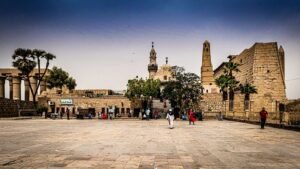
On the West Bank of the Nile, the Temple of Hatshepsut rises in pale terraces against the dramatic limestone cliffs of Deir el-Bahari. From a distance, the temple seems to belong to the mountain itself. Up close, its columns, monumental statues and open courtyards reveal the extraordinary ambition of ancient Egyptian architecture.
The Woman Who Became Pharaoh
Hatshepsut lived during Egypt’s Eighteenth Dynasty, a period of growing wealth, international influence and ambitious building. She was the daughter of King Thutmose I and married her half-brother Thutmose II, becoming a royal wife in a dynasty that placed great importance on succession. When Thutmose II died, his son Thutmose III was still young. Hatshepsut initially exercised authority as regent on his behalf. Over time, however, she assumed the full titles and imagery of kingship, ruling as pharaoh in her own right. Her reign is commonly dated to approximately 1479–1458 BCE, although precise ancient chronologies vary.
This transition was remarkable, but it did not mean that Hatshepsut simply abandoned Egyptian tradition. Instead, she worked within the language of royal legitimacy. In inscriptions and images, she presented herself as the rightful ruler chosen by the gods, particularly Amun. Some representations show her with a ceremonial false beard and other traditional symbols of the pharaoh. These were signs of royal office rather than an attempt to conceal that she was a woman. Hatshepsut’s monuments show how carefully she used established forms of Egyptian kingship to make an unusual political position appear both sacred and legitimate.
A Reign of Building, Trade and Religious Ceremony
Hatshepsut’s reign is especially associated with major construction projects. At Karnak, on the east bank of the Nile, she commissioned monuments that celebrated the god Amun and her relationship with him. Her obelisks, carved from granite transported from Aswan, were among the most visible expressions of royal devotion and engineering ambition. Temples were not only religious places; they were also statements of authority, economic centers and stages for public ceremony.
The famous expedition to Punt, recorded in reliefs at Deir el-Bahari, is another important part of her legacy. Egyptian accounts describe a voyage to a distant trading region from which valuable goods were brought back, including incense-bearing trees, aromatic resins and luxury materials. Scholars continue to debate Punt’s exact location, generally placing it somewhere around the Red Sea region and the Horn of Africa. The reliefs matter because they present trade as a royal achievement: Hatshepsut is shown securing prestigious offerings for Amun and strengthening Egypt’s connections beyond the Nile Valley.
Why the Temple Was Built at Deir el-Bahari
Hatshepsut’s mortuary temple stands at Deir el-Bahari on the west bank of the Nile, in the broader Theban necropolis. The west bank had deep funerary significance in ancient Egyptian belief because the setting sun evoked the passage into the afterlife. A mortuary temple was a place where rituals and offerings could sustain the memory and cult of a deceased ruler. Hatshepsut’s temple also honored Amun and connected her kingship to the religious landscape of Thebes.
The temple is often associated with the name Djeser-Djeseru, usually translated as “Holy of Holies.” Its design is attributed to Senenmut, a prominent official closely associated with Hatshepsut, although the exact scope of his architectural role is debated. The building’s long horizontal terraces, ramps and colonnades create an extraordinary dialogue with the steep limestone cliffs behind it. What visitors see today is partly ancient fabric and partly the result of extensive archaeological reconstruction. Looking carefully at the stonework and surfaces can reveal this long history of damage, excavation and conservation.
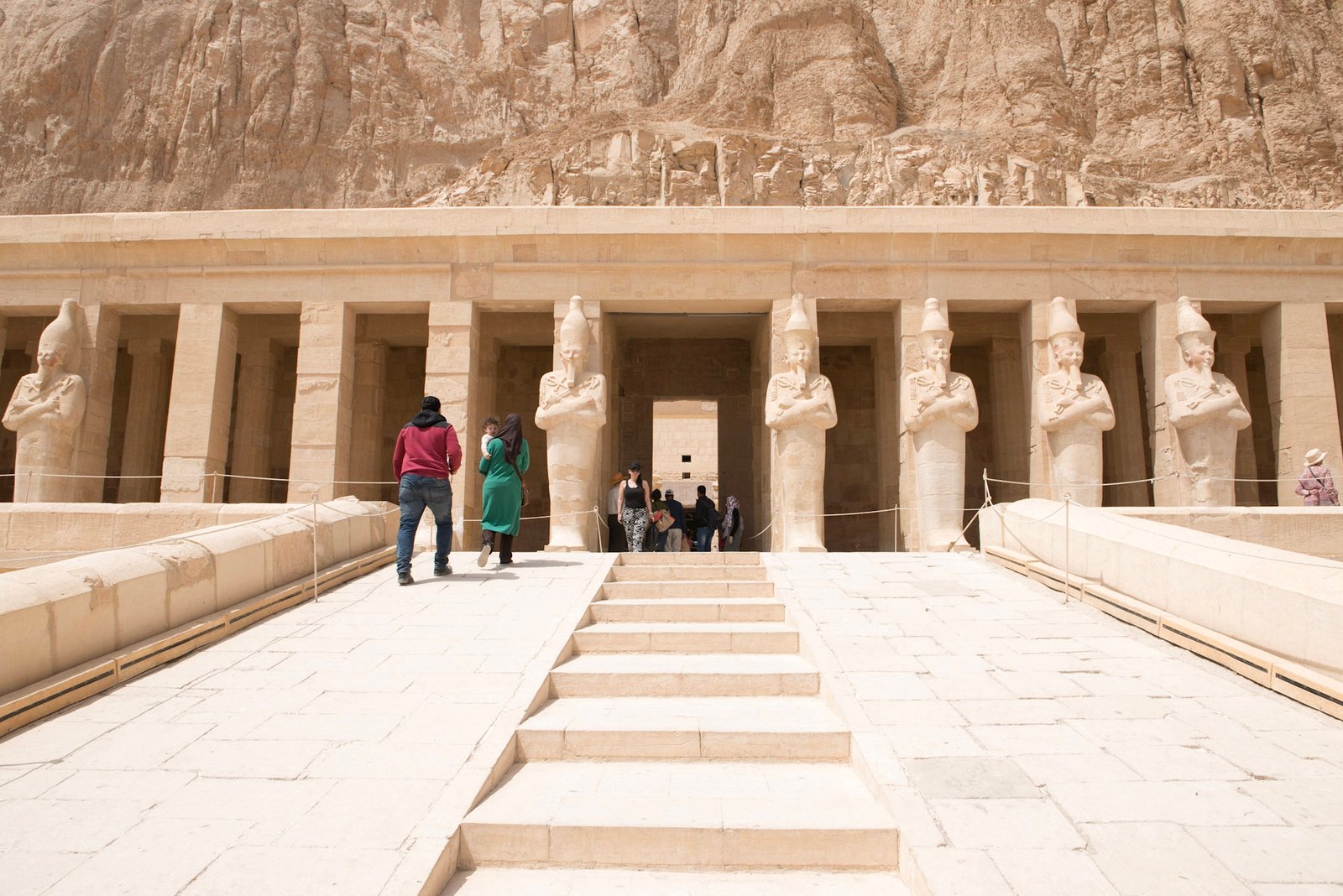
The Terraces, Colonnades and Sacred Spaces
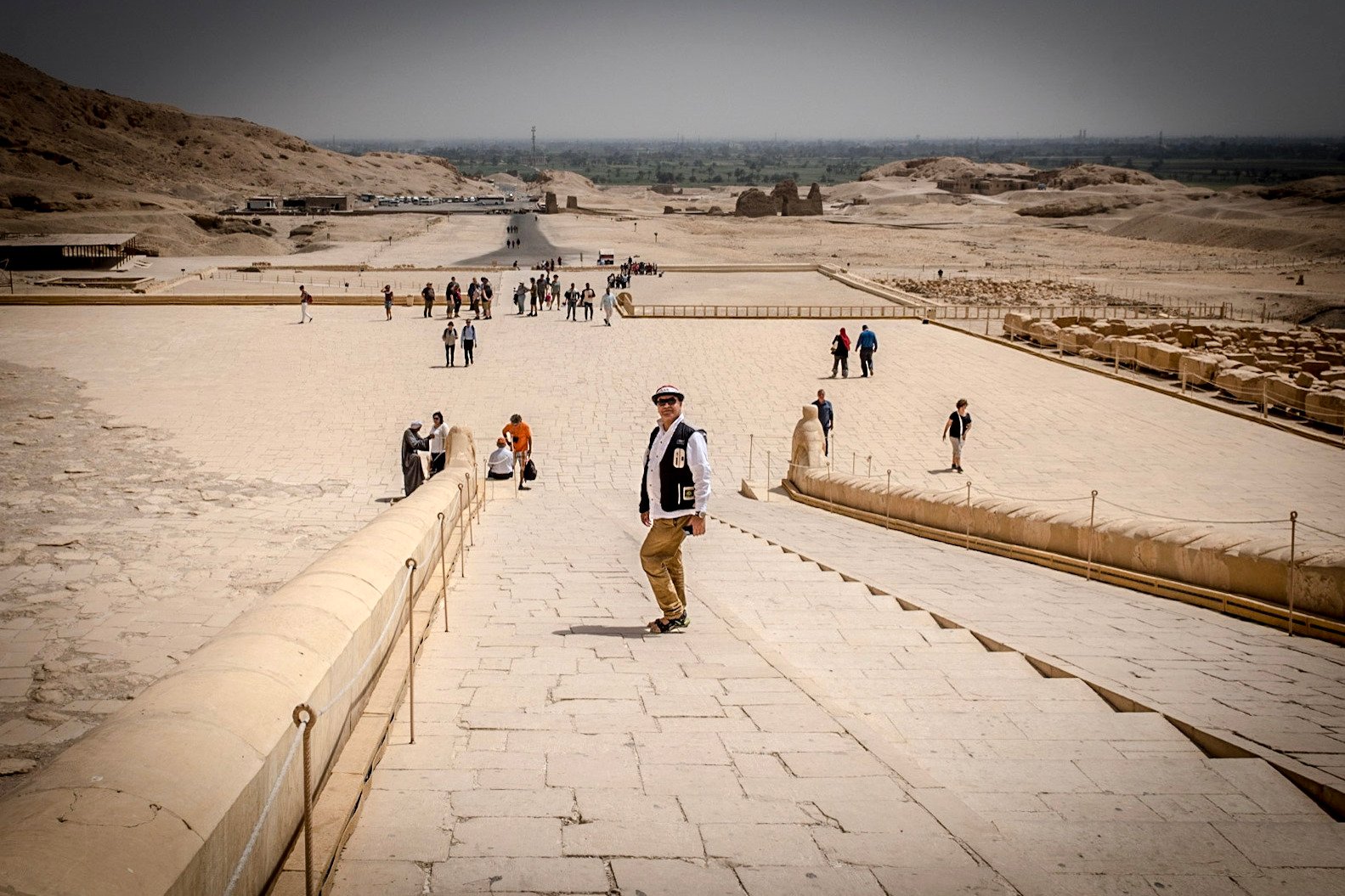
The temple’s three ascending terraces were connected by central ramps, leading visitors toward increasingly sacred spaces. Broad colonnades frame the terraces and create rhythmic patterns of sunlight and shade. In ancient times, the approach would have been more colorful and animated than the pale stone appearance familiar today. Painted reliefs, cultivated areas and ceremonial activity helped transform the site into a carefully planned setting for royal and religious meaning.
Several parts of the complex tell different stories. Reliefs associated with the expedition to Punt celebrate foreign trade and the transport of exotic goods. Other scenes present Hatshepsut’s divine birth and coronation, reinforcing her claim to the throne. Chapels and sanctuaries honor deities, including Hathor and Anubis, while the central sanctuary is dedicated to Amun. These elements make the temple more than an impressive façade: it is a historical document carved in stone, where architecture and images work together to express the ruler’s identity.
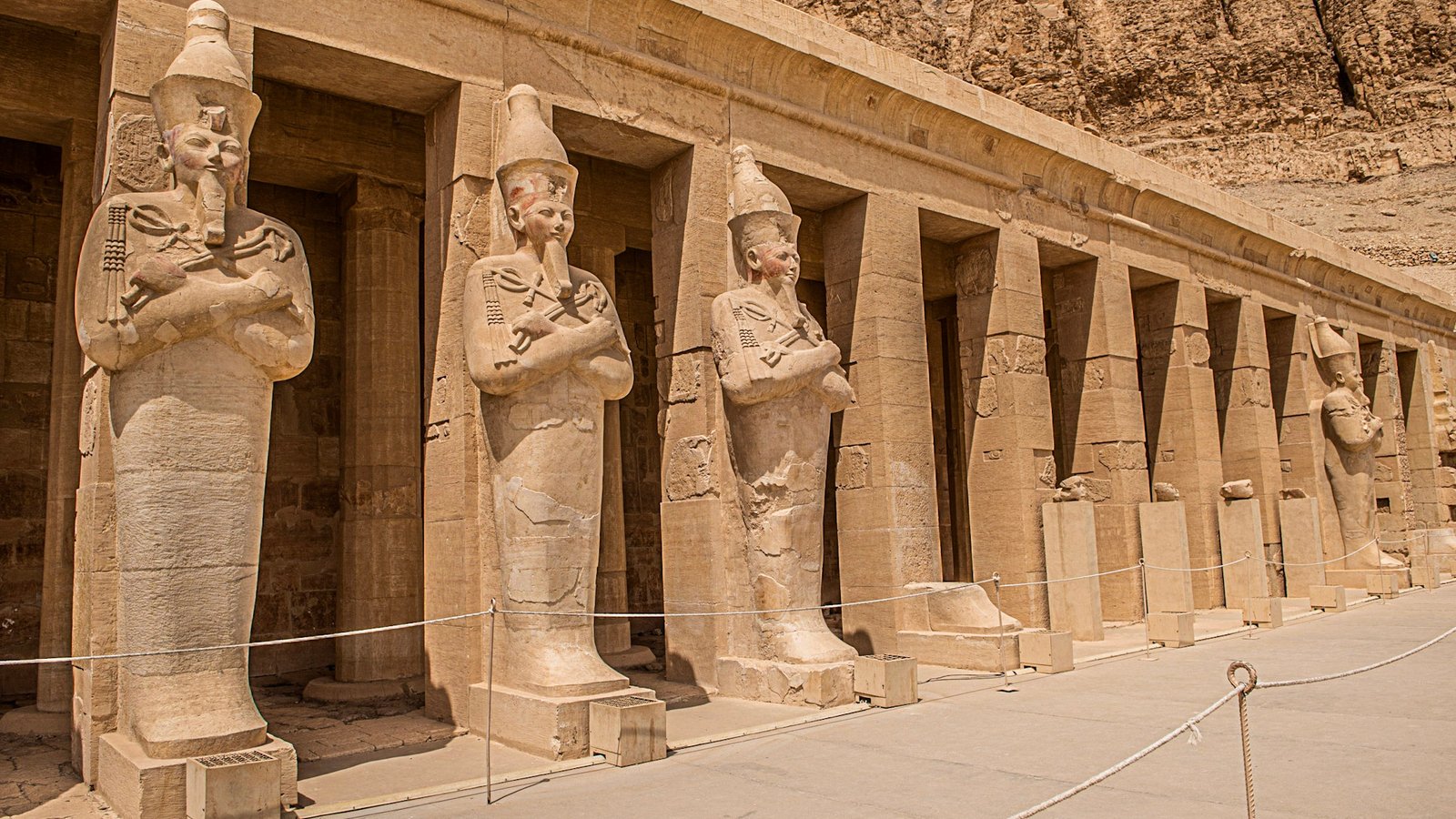
Hatshepsut’s Statues and Royal Image
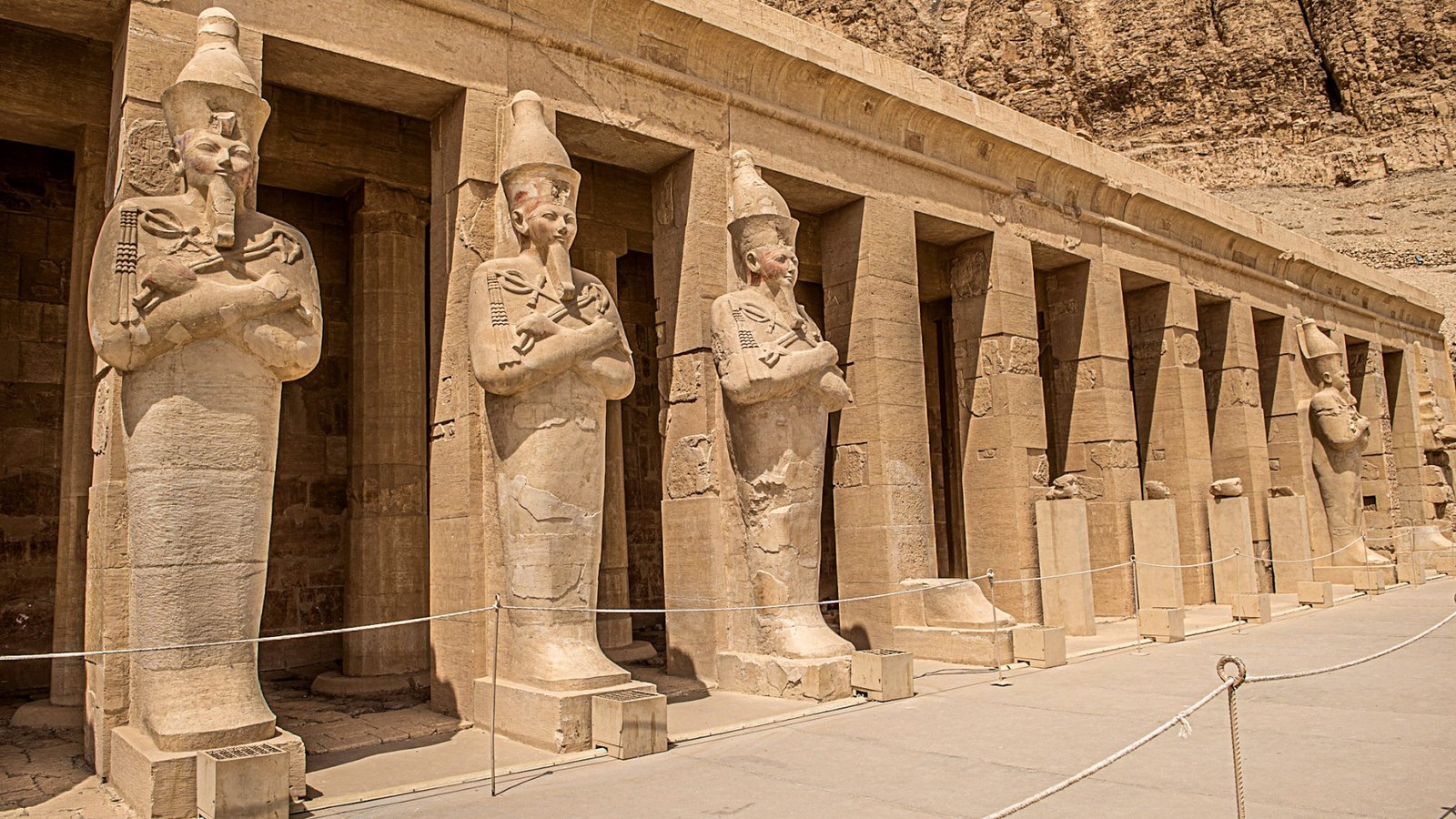
Among the temple’s most recognizable features are the statues showing Hatshepsut in the form of Osiris, with crossed arms and the regalia of kingship. Their repetition along the architecture emphasizes the ruler’s enduring relationship with divine and funerary traditions. For photographers, the statues reward both wide views that reveal their architectural rhythm and close views that show weathering, surviving detail and variations in the stone.
Ancient Egyptian royal art did not aim primarily to capture a candid personal likeness. It expressed status, divine protection, ideal order and continuity. This is why Hatshepsut can appear in different forms across her monuments: sometimes with feminine features, sometimes in the established visual language of a male pharaoh. Reading these images as symbols of kingship makes the photographs more meaningful and avoids treating their appearance as a modern portrait.
What Happened After Her Death?
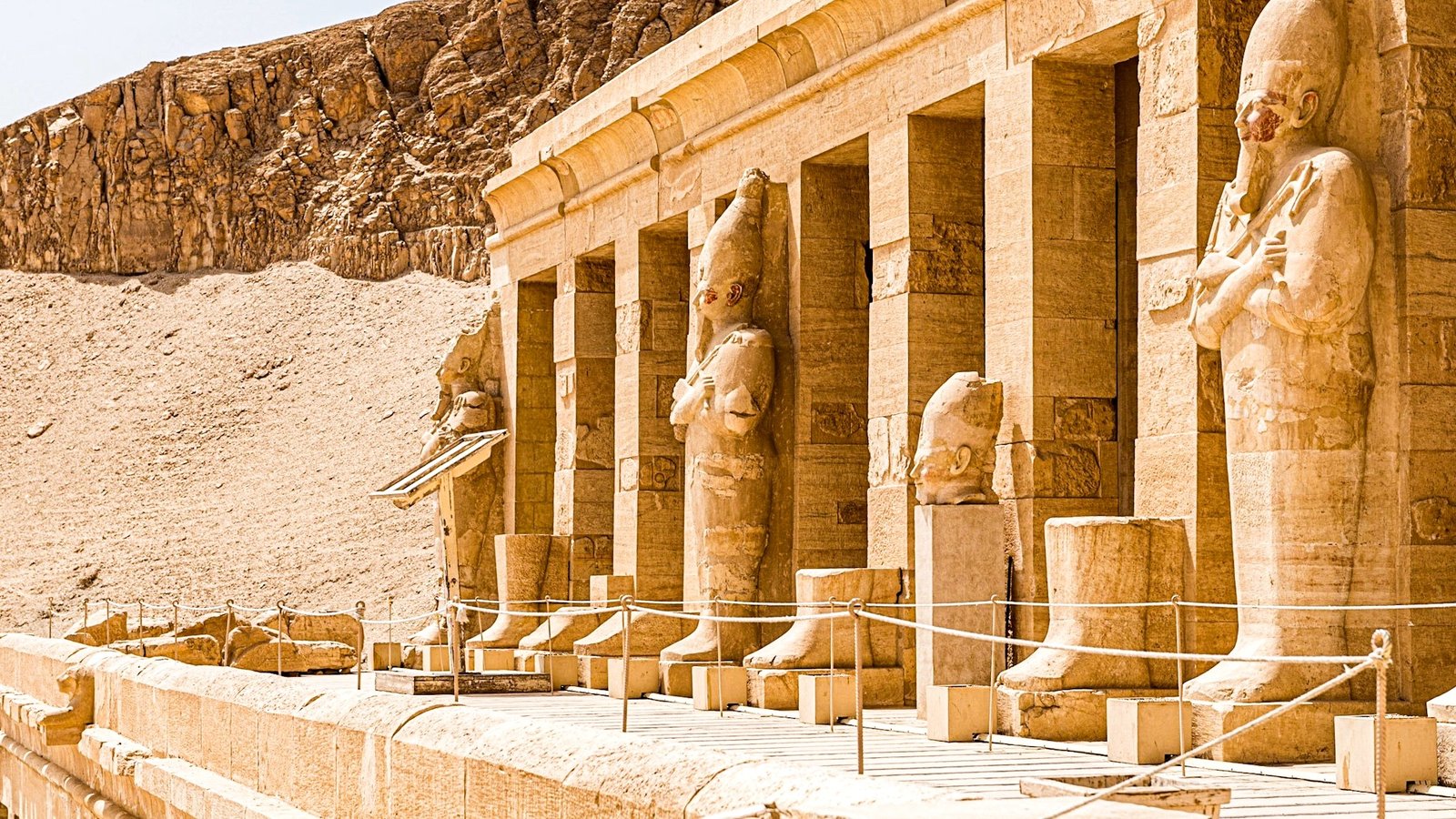
After Hatshepsut’s death, Thutmose III continued to rule and became one of Egypt’s best-known military pharaohs. At some point later in his reign, many of Hatshepsut’s royal names and images were removed, altered or replaced. This has often been described as an effort to erase her from history, but historians remain cautious about the precise motives and timing. Political succession, the presentation of a continuous male royal line and the reuse of monuments may all have played roles.
The damage was not uniform, and many representations and inscriptions survived. That survival is crucial: without the surviving monuments, it would be far harder to reconstruct Hatshepsut’s extraordinary career. The broken or restored surfaces visible at the temple therefore tell two histories at once—the history of her reign and the history of how later generations treated her memory.
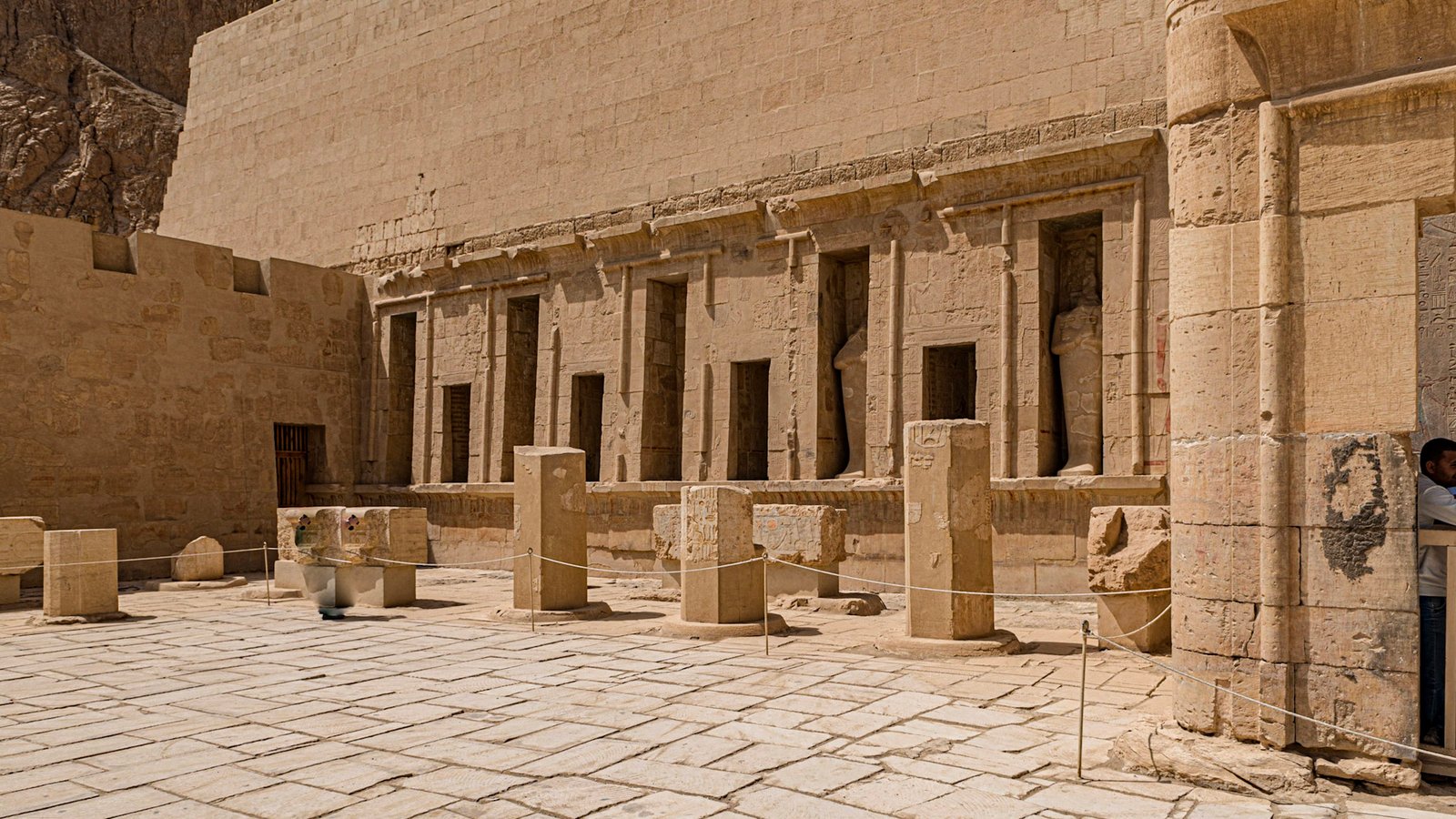
Rediscovery, Restoration and the Temple Today
The ruins of Deir el-Bahari attracted travelers and scholars long before modern archaeology. Excavations and restoration projects over many decades have revealed architectural fragments, statues, inscriptions and traces of decoration. Egyptian and international teams have worked to stabilize, study and reconstruct the site, and conservation continues to shape how visitors experience it today.
A modern visit is also a reminder that archaeological sites are fragile. Sun, wind, tourism and earlier damage all affect ancient surfaces. Staying on permitted paths, respecting barriers and avoiding contact with reliefs help protect the temple for future generations. Photographs can preserve the feeling of a visit while drawing attention to the details that conservation teams work to safeguard.
Reading the Photographs as History
The strongest photographs of Hatshepsut’s Temple can tell the story in layers. A wide opening image establishes the monumental setting beneath the cliffs. A view of the terraces explains the temple’s unusual design. Photographs of statues and columns reveal how royal identity was repeated across the architecture. Details of reliefs, inscriptions and surviving decoration bring the religious and political messages closer.
Together, the architecture, statues and carved details invite us to explore the temple with both curiosity and historical context.
A Temple Built into the Landscape
The mortuary temple was built during the reign of Hatshepsut, a woman who ruled Egypt as pharaoh in the Eighteenth Dynasty. Its long terraces and colonnades were designed to make an impression, with the cliffs forming a natural backdrop unlike almost anywhere else in Egypt.
Faces of the Pharaoh
One of the most striking features is the row of Osiride statues associated with Hatshepsut. With crossed arms and royal crowns, they stand against the temple’s columns. The weathering and traces of color visible on the stone make each figure a fascinating photographic subject.
Walking Through the Courtyards
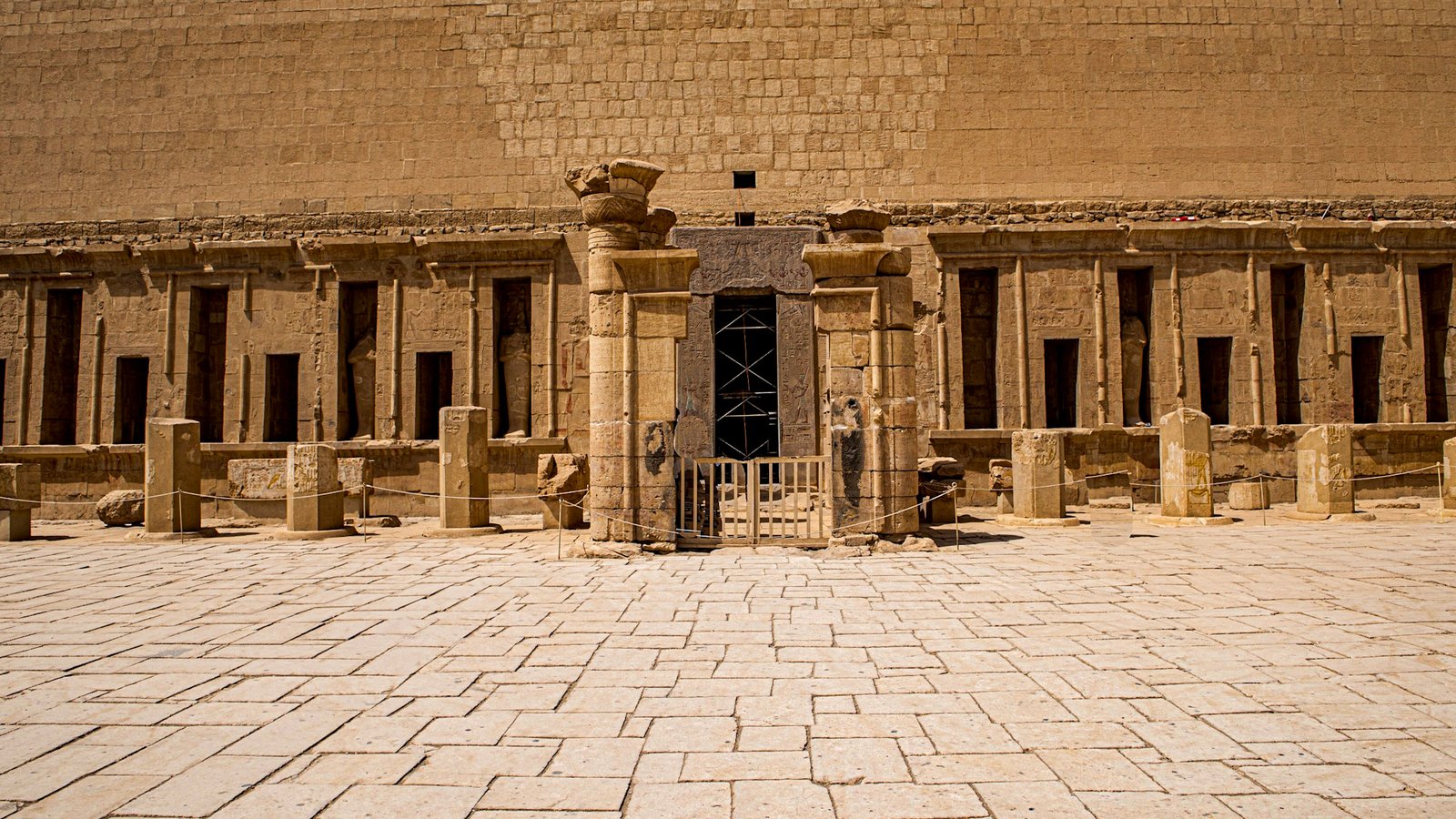
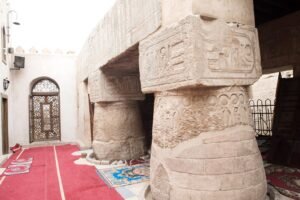
The temple changes character as you move from the broad sunlit approach into its quieter spaces. The courtyards and doorways reveal carved surfaces, surviving fragments and the remarkable geometry of the architecture. Visitors in the photographs offer a sense of scale beside the enormous statues and walls.
Photographing Deir el-Bahari
Photographing this site means working with intense desert sunlight, bright limestone and deep shadows. Wide views show the relationship between the temple and the surrounding cliffs; close compositions reveal the expressions and details of the royal statues. Together, the photographs tell a more complete story than either perspective alone.
A Lasting Impression of Luxor
Hatshepsut’s Temple is more than a famous monument. It is a place where architecture, landscape and history meet. These photographs are part of a wider journey through Luxor, including the city’s temples and the life of the Nile.
Original travel photography by A. Abbady. Explore the full Luxor collection.