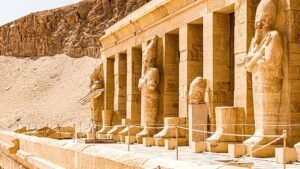
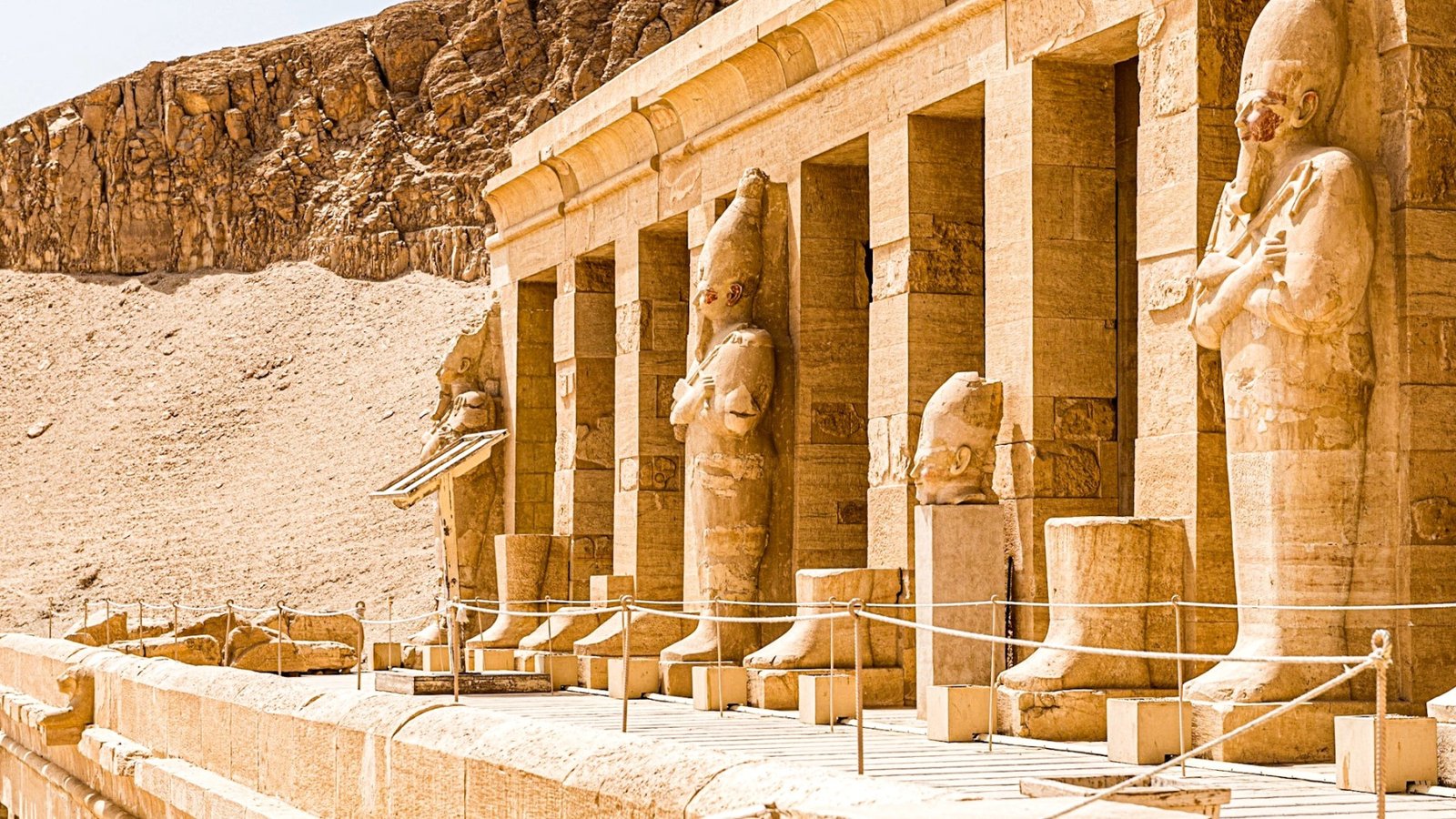
Statues and columns beneath the cliffs at Hatshepsut’s temple
Original travel photography by A. Abbady.
Luxor is one of the world’s most remarkable places to experience ancient history in the landscape where it unfolded. On the banks of the Nile, temples, royal tombs, living neighborhoods, and desert mountains exist side by side. This photographic journey follows the experience of exploring Luxor, from monumental architecture and atmospheric streets to the limestone cliffs of the west bank and the approach to the Mortuary Temple of Hatshepsut.
The photographs in this collection document more than individual landmarks. Together, they convey a sense of movement: entering temple precincts, observing decorative details, discovering everyday scenes, and traveling into the mountains where generations of ancient Egyptians created tombs and memorial monuments.
Explore the Luxor Collection
Luxor Temple: Columns, Statues and Layers of History — explore monumental architecture and the changing life of a sacred place.
The Temple of Hatshepsut Beneath the Cliffs — discover the terraces, royal statues and story of the woman who became pharaoh.
The Nile in Luxor — follow feluccas, passenger boats and the palm-lined waterfront.
Beyond the Temples — look closer at market passages, doorways and architectural details.
Ancient Thebes on the Nile
Known in antiquity as Thebes, Luxor became an important center of Egyptian religious and political life. Its temples and funerary landscapes preserve evidence of successive rulers, artistic traditions, and beliefs about the relationship between the living and the dead. The city’s enduring appeal comes not only from the scale of its monuments but also from the way they remain embedded in a distinctive natural environment.
The Nile divides the area into two broad zones. The east bank includes Luxor Temple and the vast temple complex at Karnak. Across the river, the west bank contains royal burial valleys and mortuary temples set against a dramatic range of limestone hills. Experiencing both banks reveals how ancient architecture, sacred geography, and the surrounding terrain were connected.
Luxor Temple: Monumental Architecture and Living History
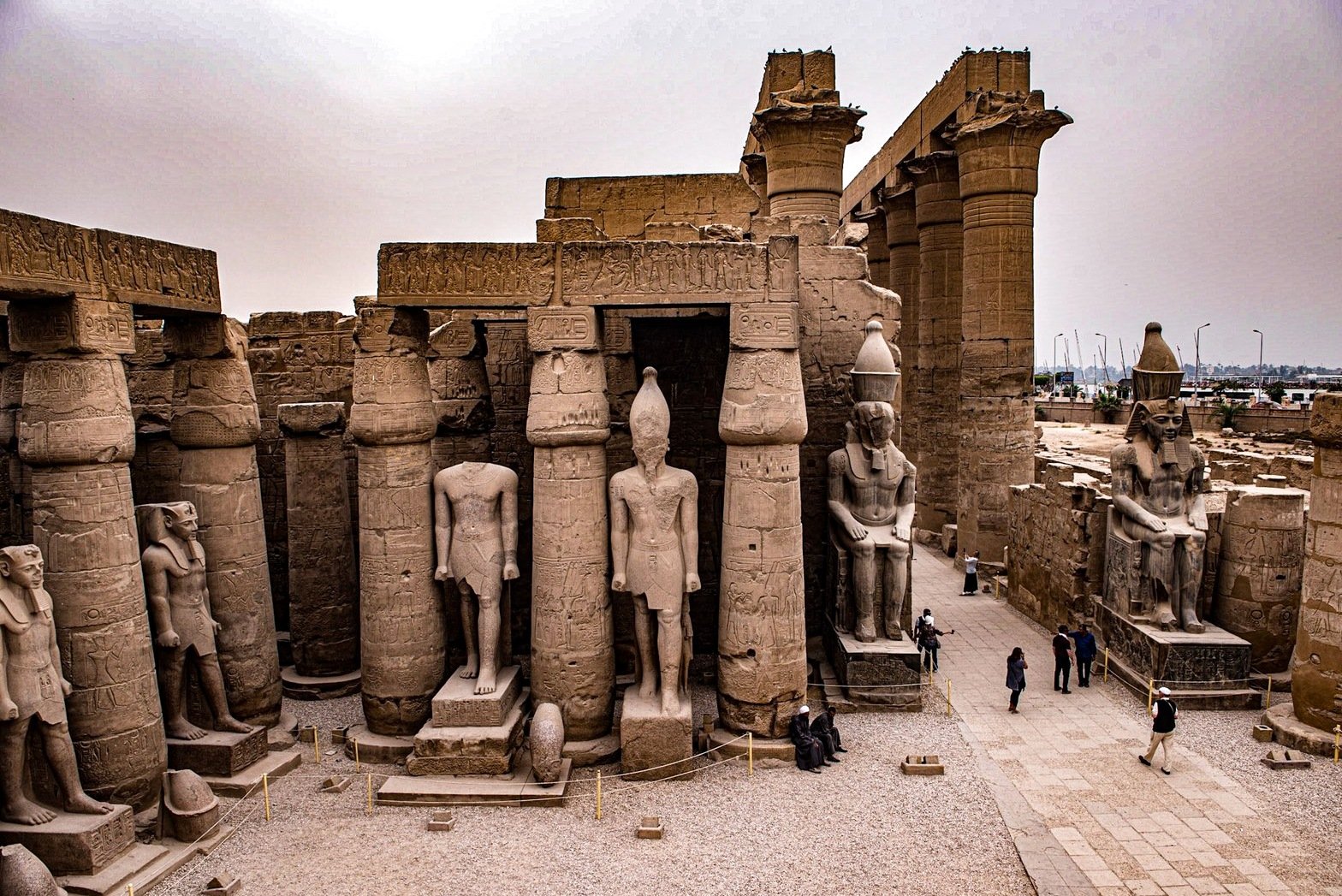
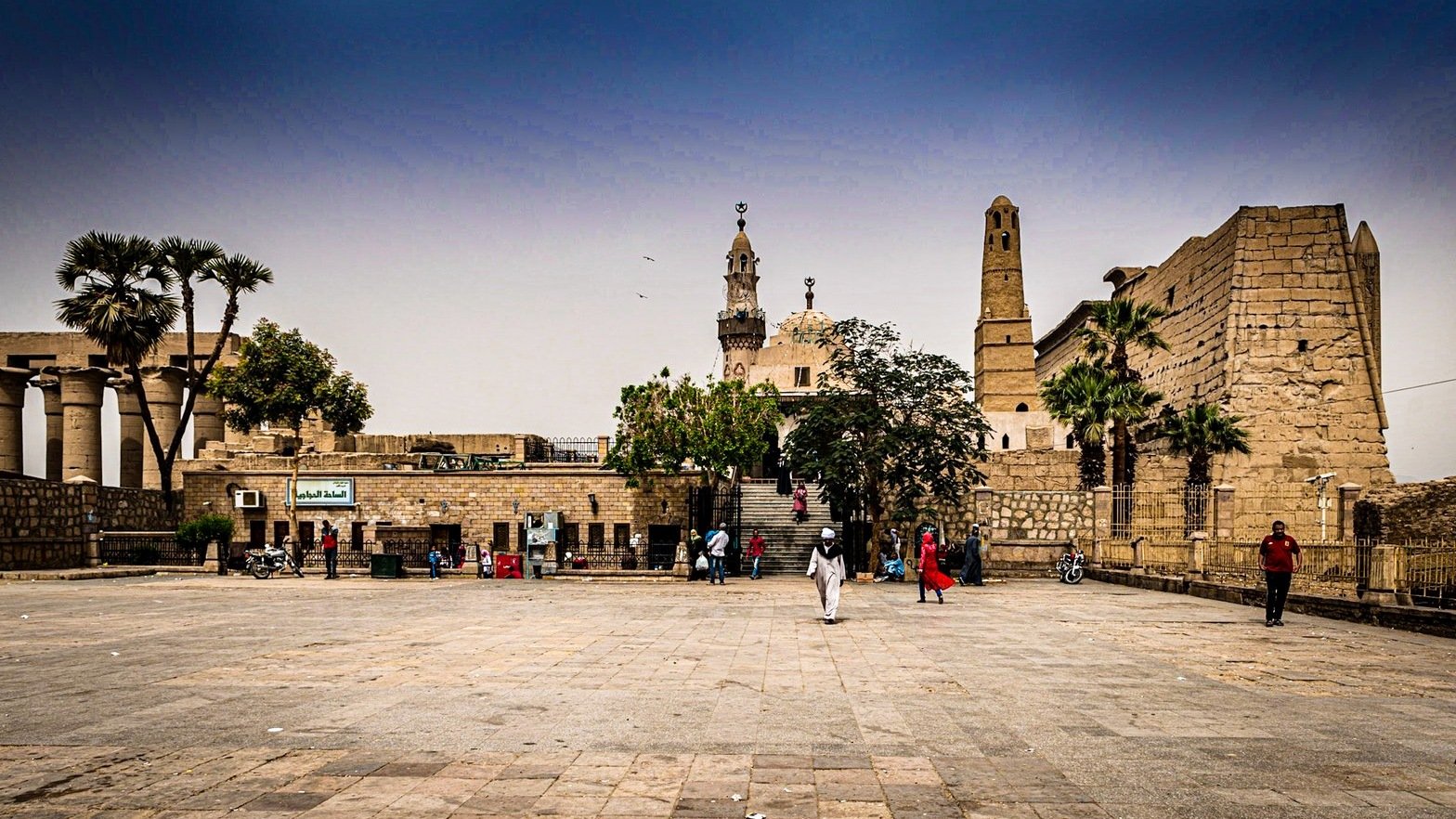
Luxor Temple is among the city’s most recognizable landmarks. Its courtyards, columns, statues, and carved surfaces reflect the ambitions and religious practices of ancient Egypt. The temple developed over time, with significant construction associated with Amenhotep III and Ramesses II, and later additions reflecting further chapters of the site’s history.
Photographs of the temple can reveal different scales of experience. A wide composition captures the mass of stone against the sky, while a closer image highlights inscriptions, sculpted figures, and the rhythms created by repeated columns. Changing light alters the appearance of the stone, bringing different textures and architectural details into focus.
Luxor Temple also tells a story of continuity and change. Later religious structures and surrounding urban life illustrate how the site has remained part of a living city rather than becoming an isolated archaeological display.
Streets, Markets, and Architectural Details
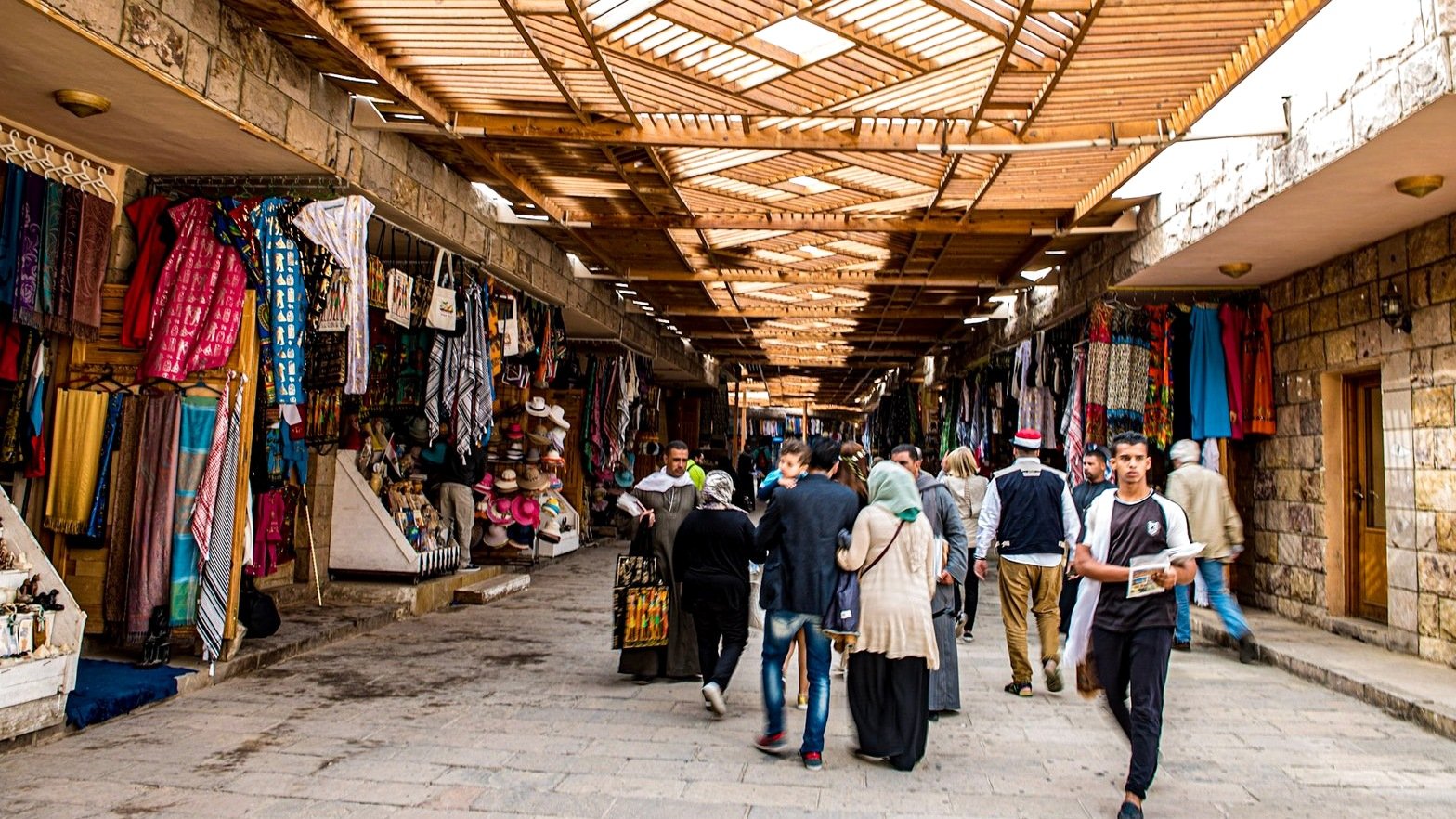
A visit to Luxor is not limited to its famous ancient monuments. Streets, market scenes, doorways, decorative interiors, and places of worship add texture to the travel experience. These images can show the meeting of everyday life and historical surroundings, offering a more complete portrait of the city.
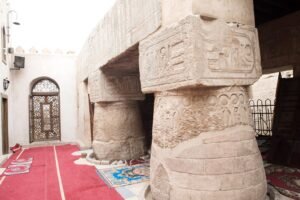
For documentary photography, context matters. A market photograph may convey color and movement; a doorway or interior may draw attention to craftsmanship, geometry, or light. The market images are described broadly as scenes in the Luxor region, because the exact named souq is not confirmed. In the architectural details, carved stone beside later doors and prayer spaces reveals a place that has continued to change.
The Nile: A Different View of the City
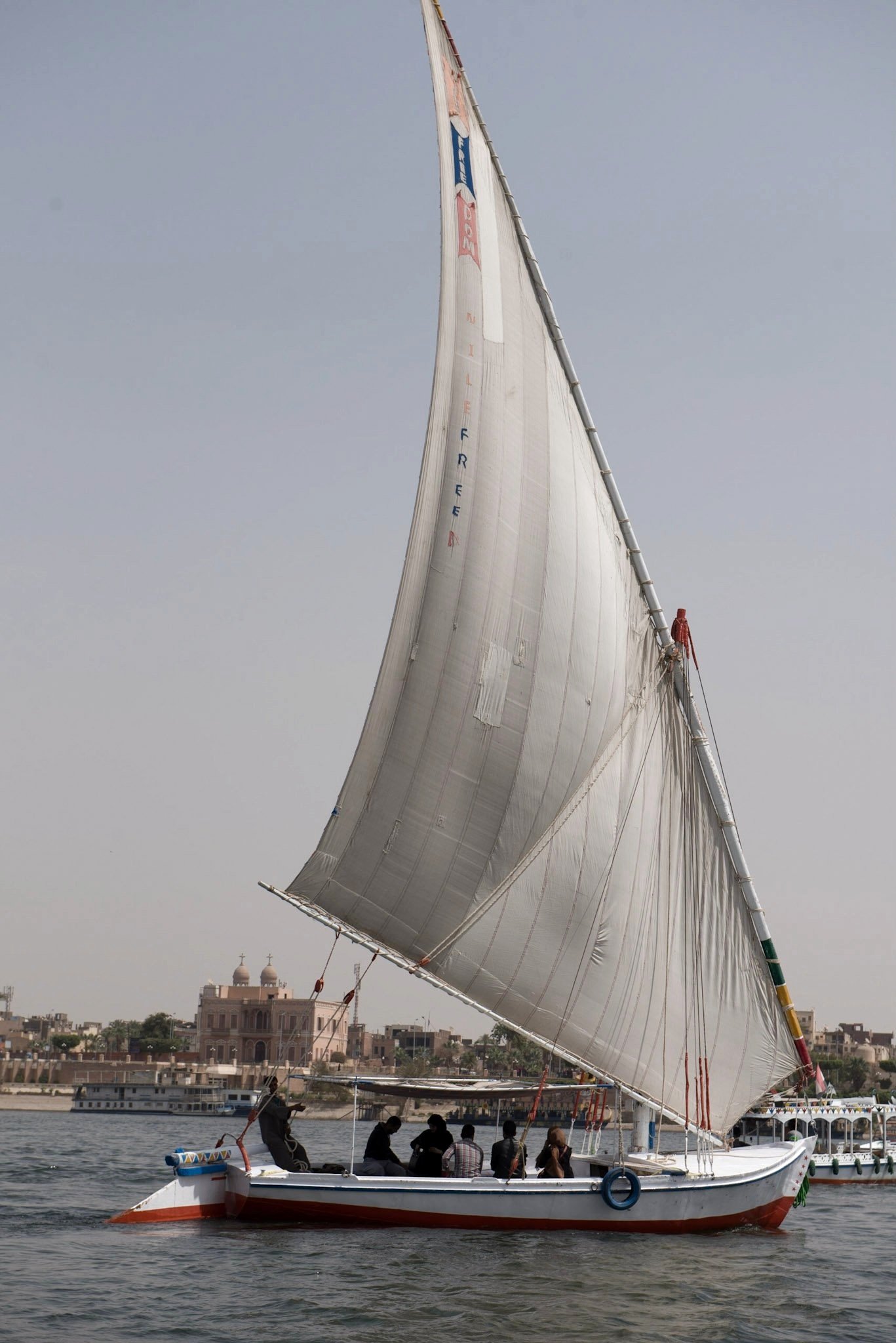
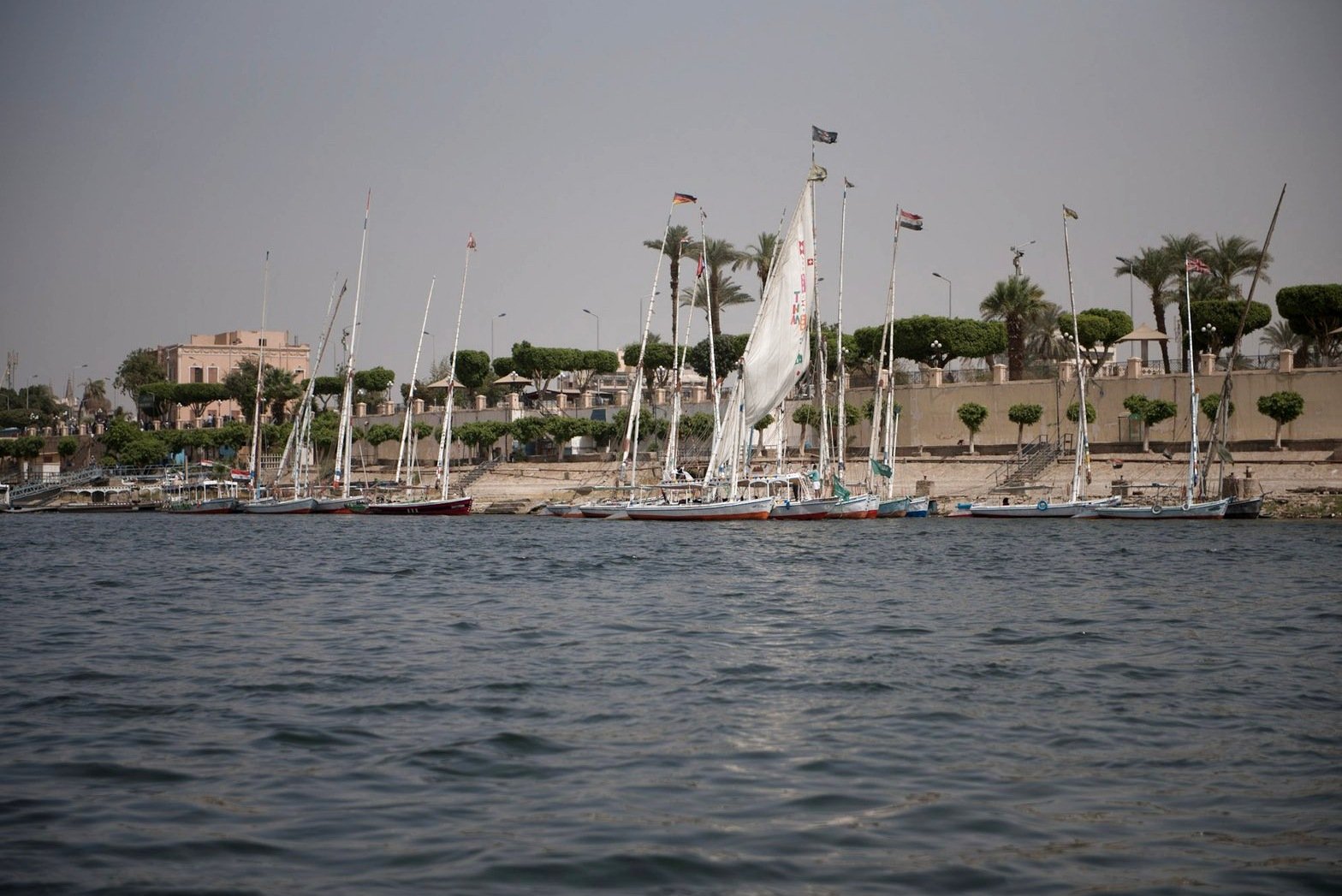
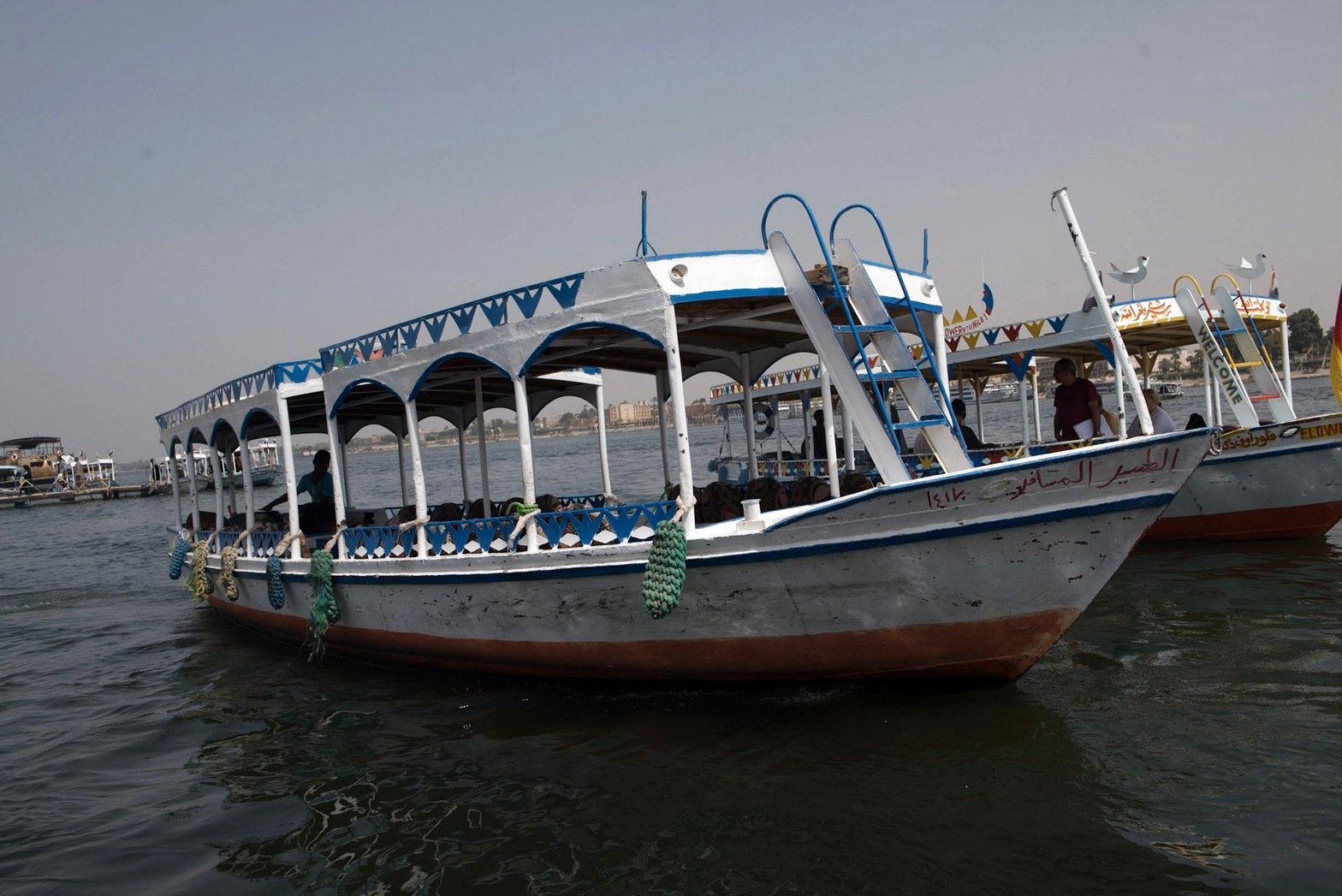
The river gives Luxor a spaciousness that is easy to miss among the temple walls. From the water, buildings, palms and monumental stonework form a changing skyline. Passenger boats share the scene with sailing craft and moored vessels, connecting the archaeological landscape with the practical rhythms of arrival, crossing and work.
A sail becomes a tall, simple shape against the sky; a small boat provides a point of color across a wide stretch of water. These views bring a quieter passage into the collection, balancing the weight and geometry of the ancient monuments. The dedicated Nile article explores river travel and the waterfront in greater detail.
Crossing to the West Bank
On Luxor’s west bank, the landscape changes dramatically. Green areas near the Nile give way to dry valleys, pale limestone, and rocky mountain slopes. The journey itself becomes part of the story. Roads bend through rugged terrain, and the immense cliffs make vehicles and visitors appear small.
These mountains are integral to the historical identity of the Theban Necropolis. Their natural formations helped define the setting for tombs and mortuary monuments, while their colors and shadows create a striking visual experience for modern travelers.
The Valley of the Kings and the Royal Necropolis
The Valley of the Kings is associated with the burials of New Kingdom rulers and members of the royal family. Tombs were cut into the desert rock and decorated with imagery and texts reflecting ancient Egyptian beliefs about the afterlife. The surrounding landscape can seem severe, yet it preserves an extraordinary concentration of cultural history.
Even photographs made outside the tombs communicate something essential about the experience: the isolation of the valleys, the layered rock, the approach roads, and the contrast between the vast desert and the human effort invested in the monuments. The royal necropolis is part of the wider setting of this journey. The photographs selected here do not document individual tomb interiors, so the valley is discussed as historical context rather than as an illustrated tour of a particular burial.
Hatshepsut’s Mortuary Temple at Deir el-Bahari
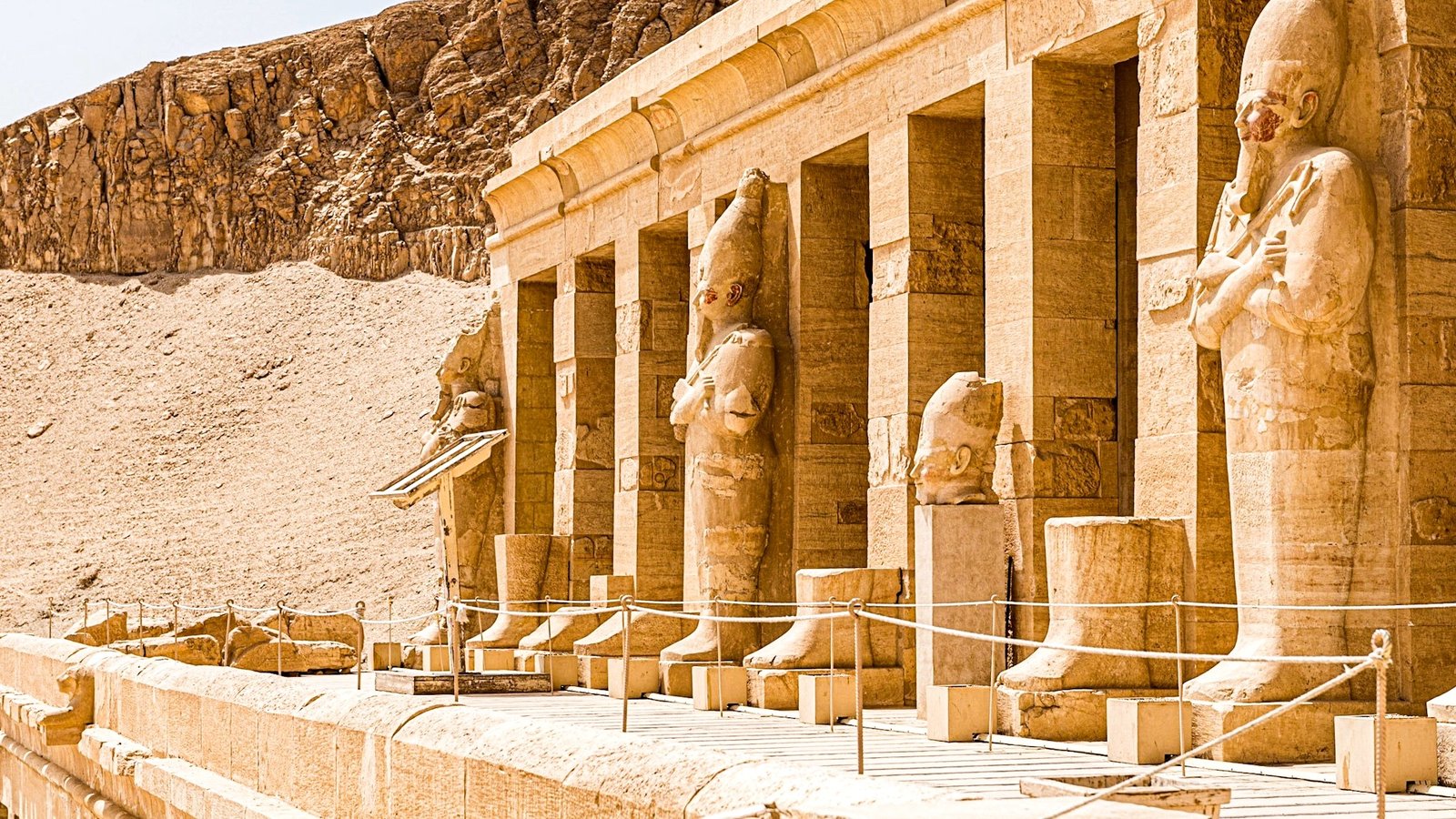
One of the most memorable sights on Luxor’s west bank is the Mortuary Temple of Hatshepsut. Built for a ruler of Egypt’s Eighteenth Dynasty, the temple stands at Deir el-Bahari beneath an imposing limestone amphitheater. Its terraces and colonnades form a powerful geometric contrast with the cliffs behind them.
Hatshepsut was one of ancient Egypt’s most significant female pharaohs. Her reign is associated with extensive building activity and a trading expedition to Punt depicted in temple reliefs. The temple’s architecture and decoration helped express royal authority and religious devotion.
Seen from the approach, the monument appears to emerge from the mountainside. From a photographer’s perspective, this is an exceptional meeting of architecture and landscape: horizontal terraces, repeating columns, steep rock faces, and open desert light combine to create a compelling composition.
Photographing Luxor: Light, Scale, and Texture
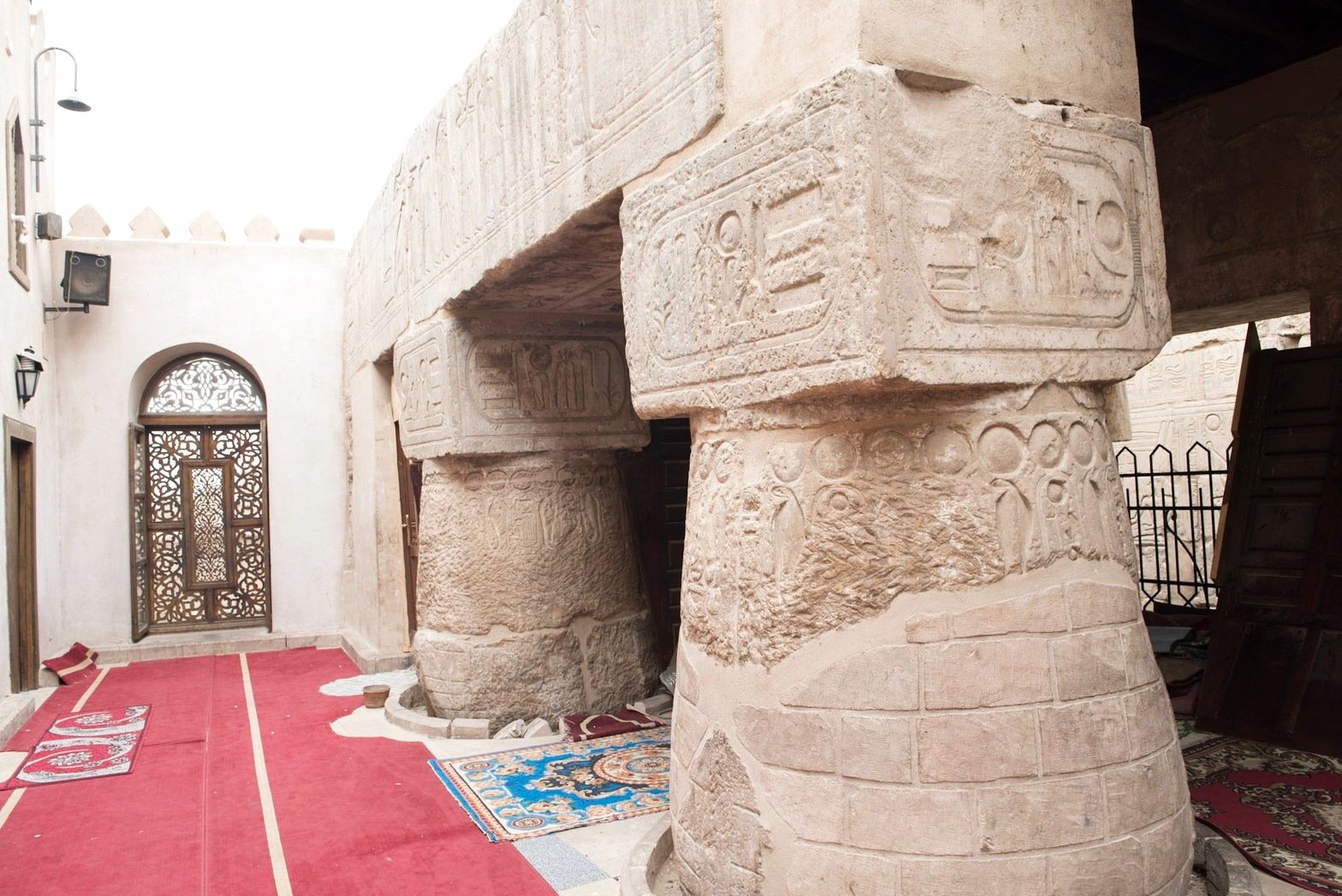
Luxor offers a remarkable range of photographic subjects, from the monumental scale of ancient temples to the fine detail of carved stone. In the desert, bright sunlight can emphasize texture and strong shadow; atmospheric haze can soften distant hills. Within architectural spaces, transitions between light and shade may create quieter, more intimate compositions.
A coherent photographic essay benefits from variety. Wide views establish place, closer frames reward attention, and travel scenes connect the landmarks into a journey. Keeping photographs centered and fully visible respects the original compositions and lets readers appreciate each image on its own terms.
A carved surface rewards a closer look just as much as a distant skyline. Weathering and shade give the stone its character, while visitors, boats and market passages bring the photographs back to a human scale.
Planning a Respectful Visit
Ancient Thebes with its Necropolis is a UNESCO World Heritage property. Visitors should follow designated routes, respect protective barriers, and observe any site-specific photography restrictions. Water, comfortable footwear, and sun protection are important in the exposed west-bank landscape. Ticketing and opening arrangements may change, so confirm current details with official sources before traveling.
Seeing Luxor in Layers
The strongest impression of Luxor comes from bringing its different settings together. Ancient columns and royal statues, a minaret above old stone, a covered market passage and a sail on the Nile do not belong to one historical moment. They belong to the same journey. Moving between them gives the monuments their wider setting and allows the city to emerge as more than a list of famous sites.
Original photography and editorial: A. Abbady Travel Photography.
Historical Sources and Further Reading
UNESCO: Ancient Thebes with its Necropolis; Egyptian Ministry of Tourism and Antiquities: Luxor Temple; Hatshepsut Temple; Valley of the Kings.